
Lessons in Dark Marketing
Lessons in Dark Marketing examines the tactics, tricks, branding moves, social pressure, nostalgia traps, manufactured hype, and attention games that shape what people buy, defend, share, and believe. This category breaks down the morally questionable but usually legal strategies hiding in plain sight across products, media, culture, business, and online spectacle.
-
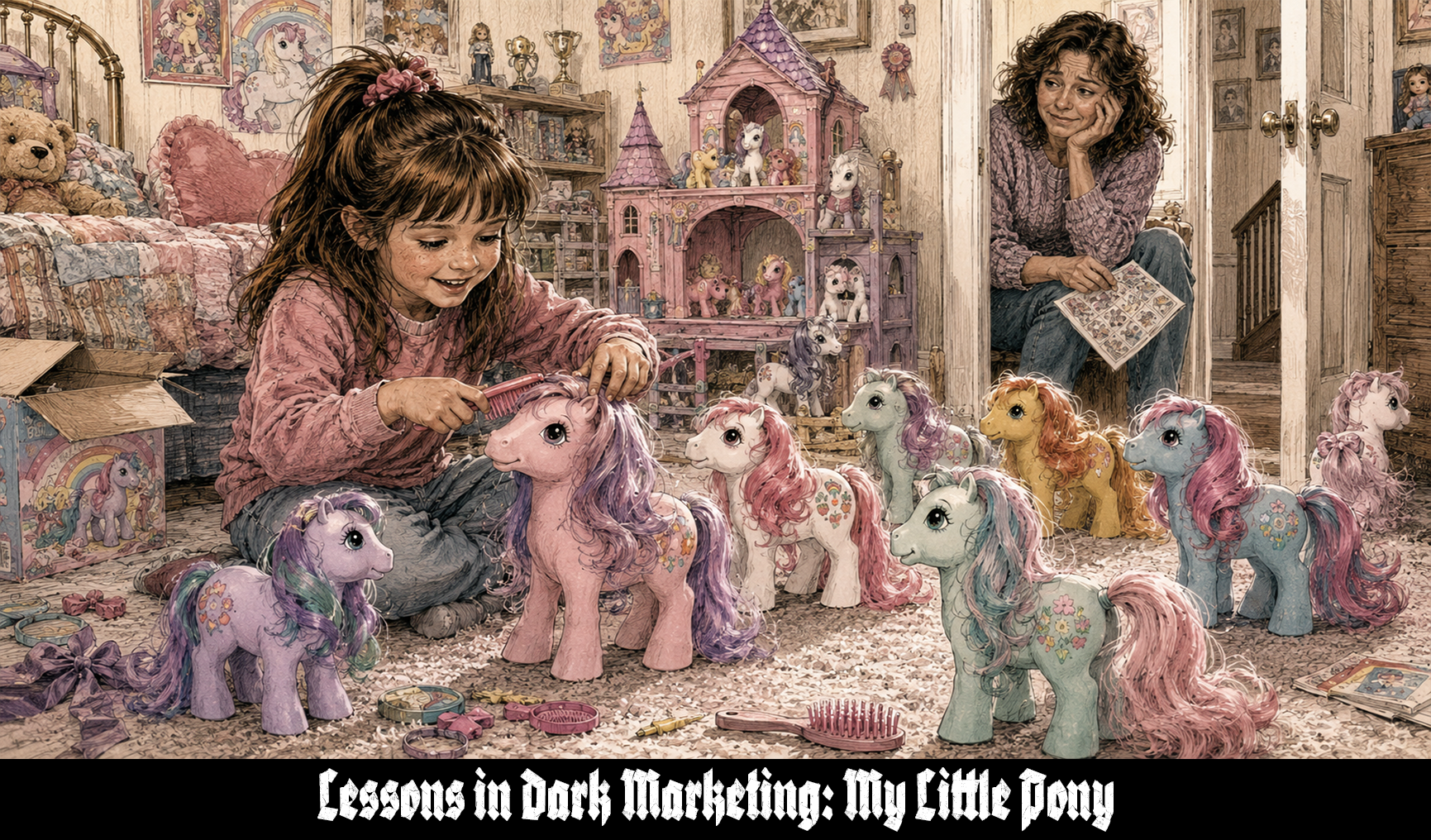
My Little Pony: A Dark Marketing Case Study in Pastel Identity, Brush-able Hair, and the Herd That Could Never Be Complete
My Little Pony turned pastel colors, brushable hair, friendship, and collectible identity into a growing plastic herd where every new pony made the ones already owned feel less complete.
-
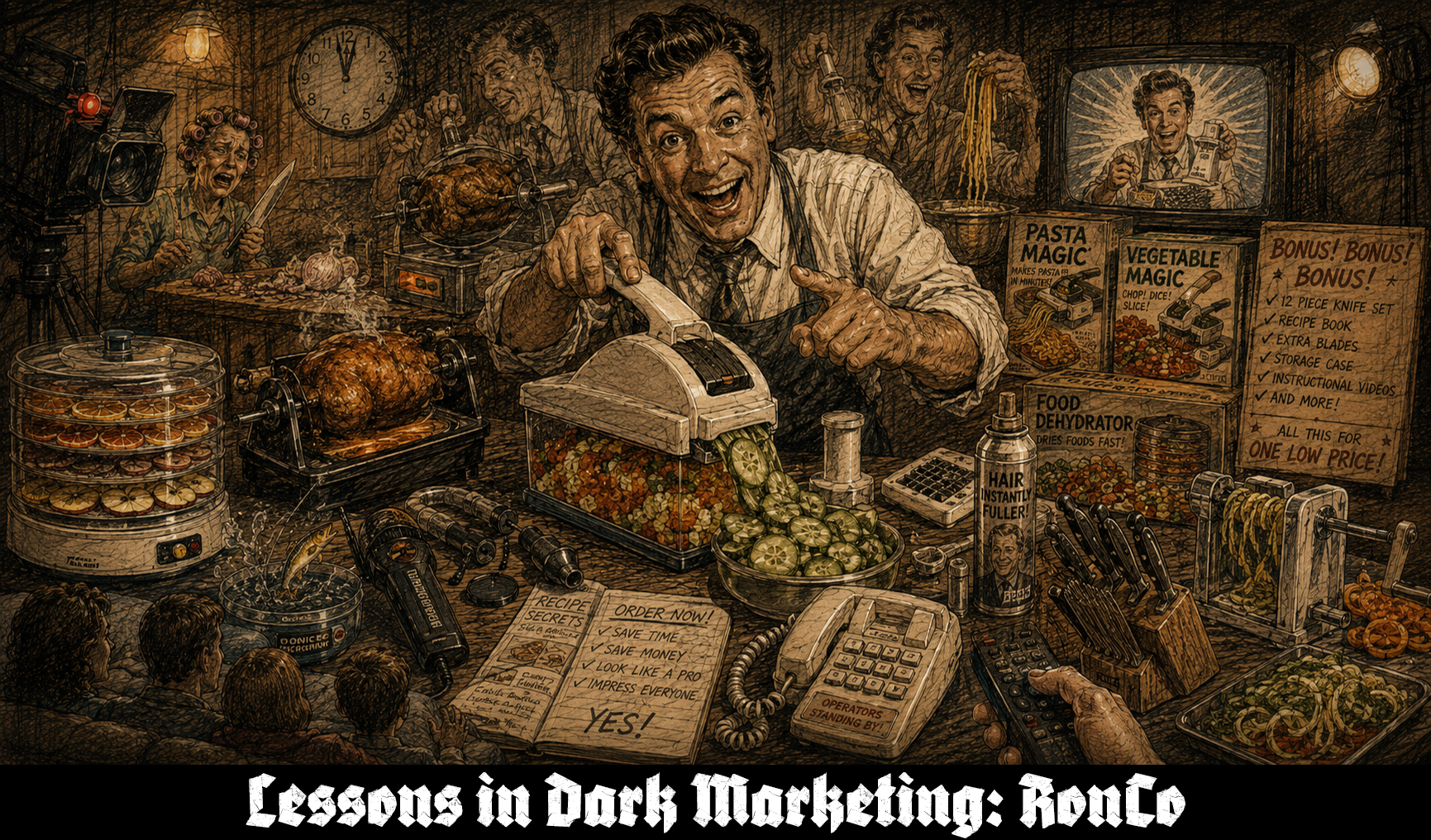
Ronco: A Dark Marketing Case Study in Infomercial Hypnosis, Kitchen Miracles, and “But Wait, There’s More” Consumer Conditioning
Ronco turned ordinary household inconvenience into televised crisis, then piled on demonstrations, bonuses, urgency, and “But wait, there’s more” until hesitation looked financially irresponsible. This Lessons in Dark Marketing case study breaks down how infomercial theater, charismatic salesmanship, kitchen miracles, manufactured need, and long-form consumer conditioning transformed unnecessary gadgets into must-have household revolutions.
-

Generation X: A Generational Demographic Profile in Neglect, Cynicism, and Pretending Not to Give a Shit
Generation X grew up neglected, skeptical, and convinced it could see through every institution trying to sell it something. But as the latchkey kids became managers, homeowners, hiring gatekeepers, and institutional adults, cynicism too often became complicity, helping normalize the same hollowed-out systems they once mocked. This Generational Demographic Profile examines how Gen X went from outsider to Boomer sidekick, and why recognizing the bullshit was never the same thing as stopping it.
-

Hatchimals: A Dark Marketing Case Study in Holiday Panic, Plastic Egg Scarcity, and the Toy Parents Had to Hunt Before It Even Hatched
In December 2016, a parent’s quest for Hatchimals showcased a unique toy marketing phenomenon. The egg-based robotic creature emphasized anticipation, emotional investment, and scarcity during the holiday rush. This approach transformed unboxing into a memorable event, generated parental urgency, and ultimately created a nostalgic toy franchise rooted in emotional experiences.
-
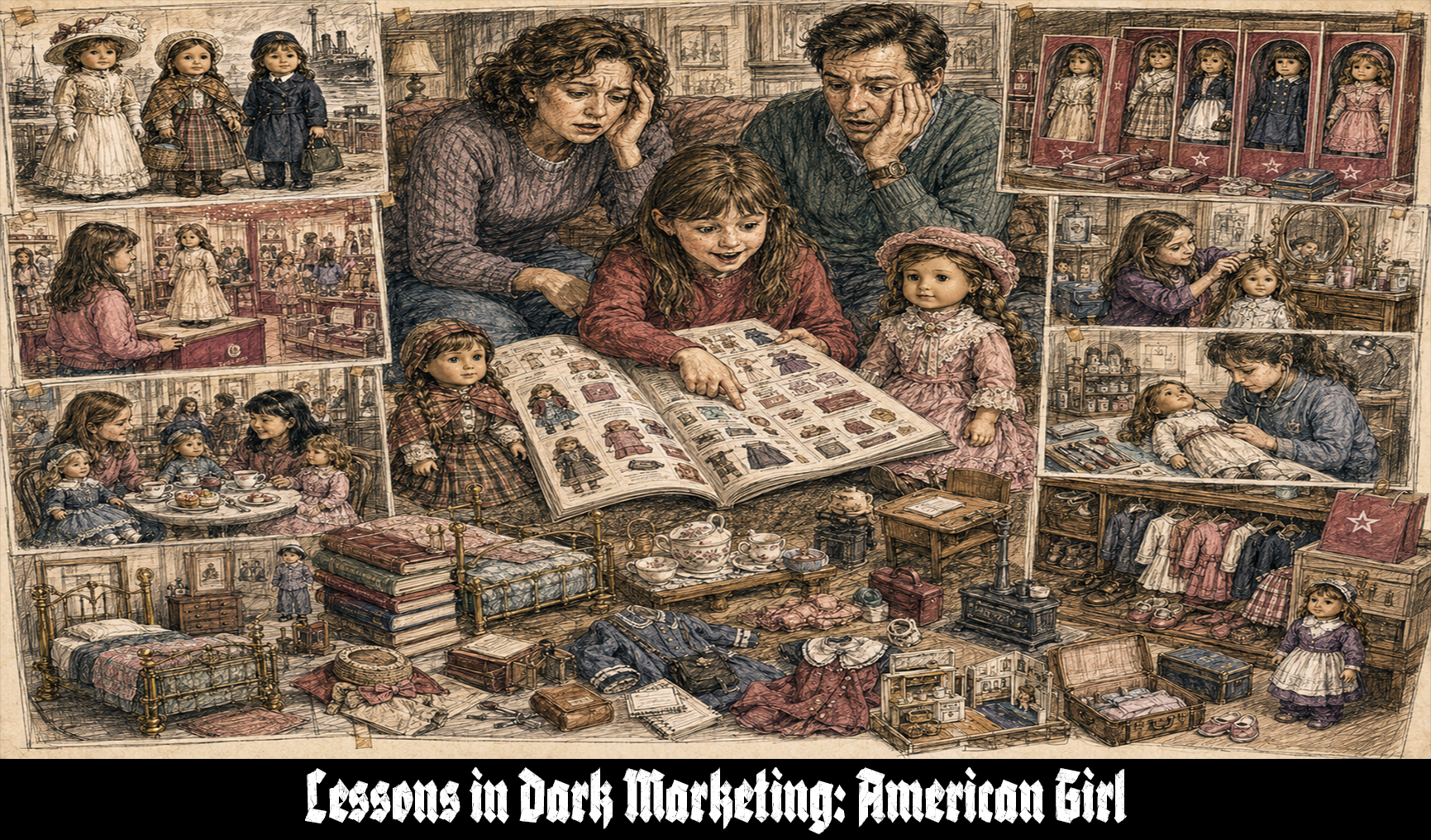
American Girl: A Dark Marketing Case Study in Historical Virtue, Identity Merchandising, and the Hundred-Dollar Doll With a Furniture Budget
American Girl turned history, identity, and education into moral cover for a premium doll ecosystem where every book, outfit, bed, tea set, salon visit, and tiny piece of furniture made the next purchase feel perfectly reasonable.
-

Garbage Pail Kids: A Dark Marketing Case Study in Playground Contraband, Licensed Disgust, and Rebellion Sold by the Pack
Garbage Pail Kids turned gross-out humor, school bans, playground trading, and adult disgust into a collectible rebellion that made every forbidden card more desirable.
-

The Clapper: A Dark Marketing Case Study in Recliner Power, Jingle-Based Obedience, and Pre-Smart-Home Laziness
The Clapper turned standing up into outdated labor and sold a cheap wall adapter as the future of home automation. This Lessons in Dark Marketing case study breaks down how recliner power, jingle-based repetition, novelty, accessibility, mockery, and pre-smart-home laziness transformed two claps into one of the most memorable direct-response sales machines in American advertising.
-
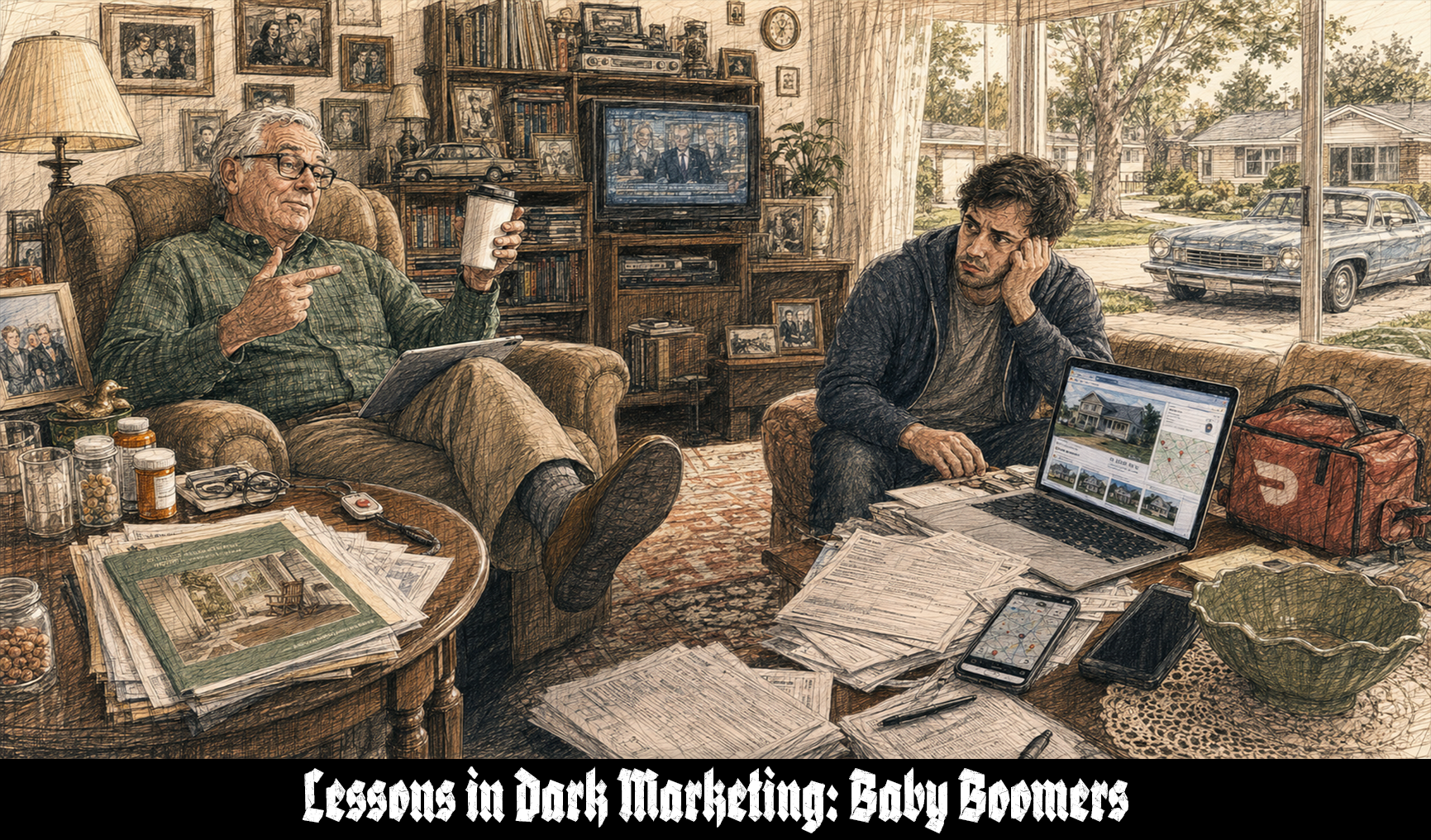
Baby Boomers: A Generational Demographic Profile in Prosperity, Self-Mythology, and Pulling Up the Ladder
Baby Boomers inherited extraordinary prosperity, reshaped American culture, and became one of the most powerful consumer generations in history. This Generational Demographic Profile examines how that advantage became self-mythology, how the economic ladder changed behind them, and how marketers learned to follow the same customer from childhood aspiration to retirement fear.
-
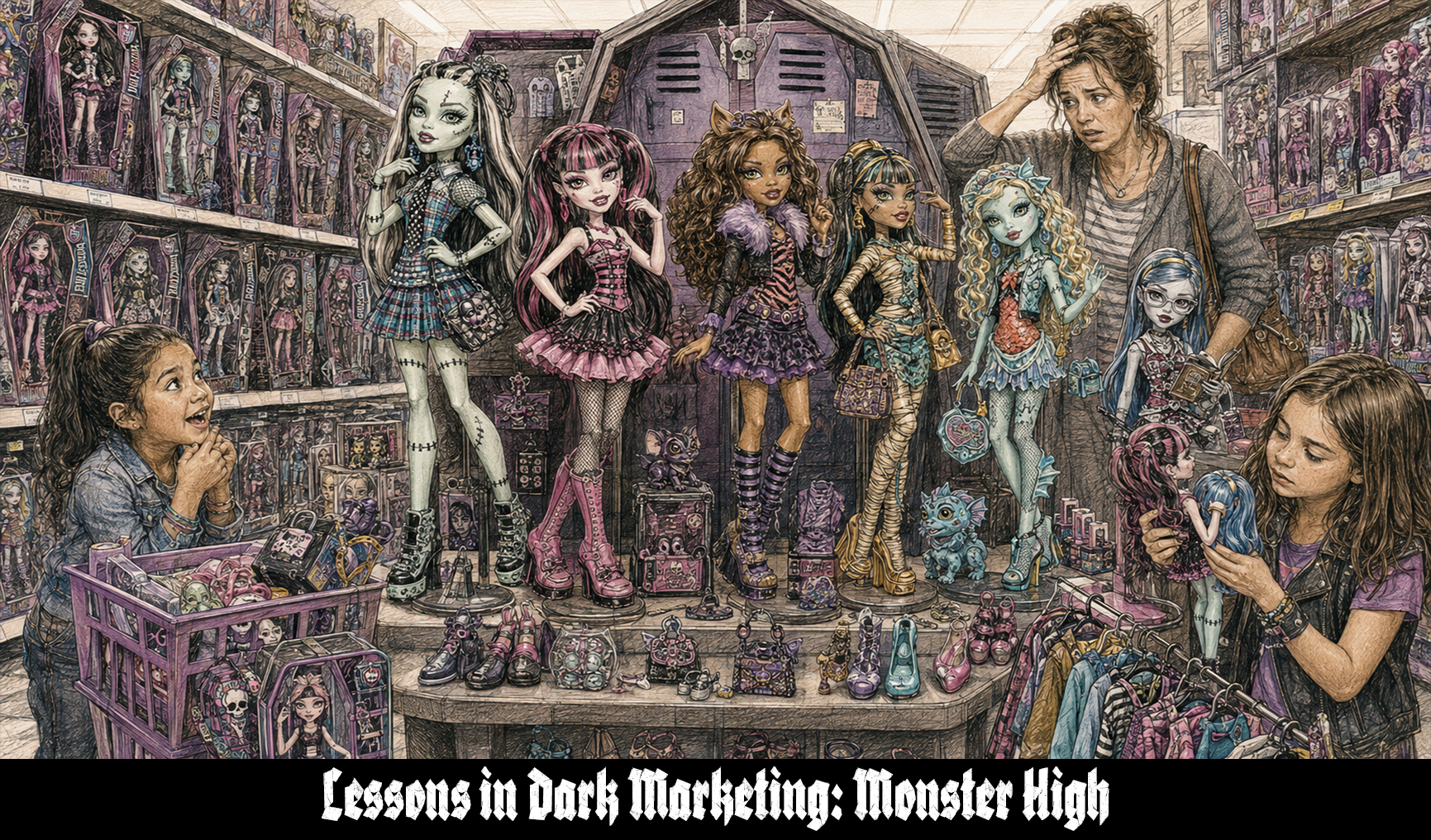
Monster High: A Dark Marketing Case Study in Packaged Outsider Identity, Doll-Shelf Diversity, and the Merchandising of Difference
Monster High sold self-acceptance with fangs, stitches, platform heels, and a shelf full of friends sold separately. This case study exposes how outsider identity, diversity, fashion, and belonging became an endlessly expandable collectible machine.
-
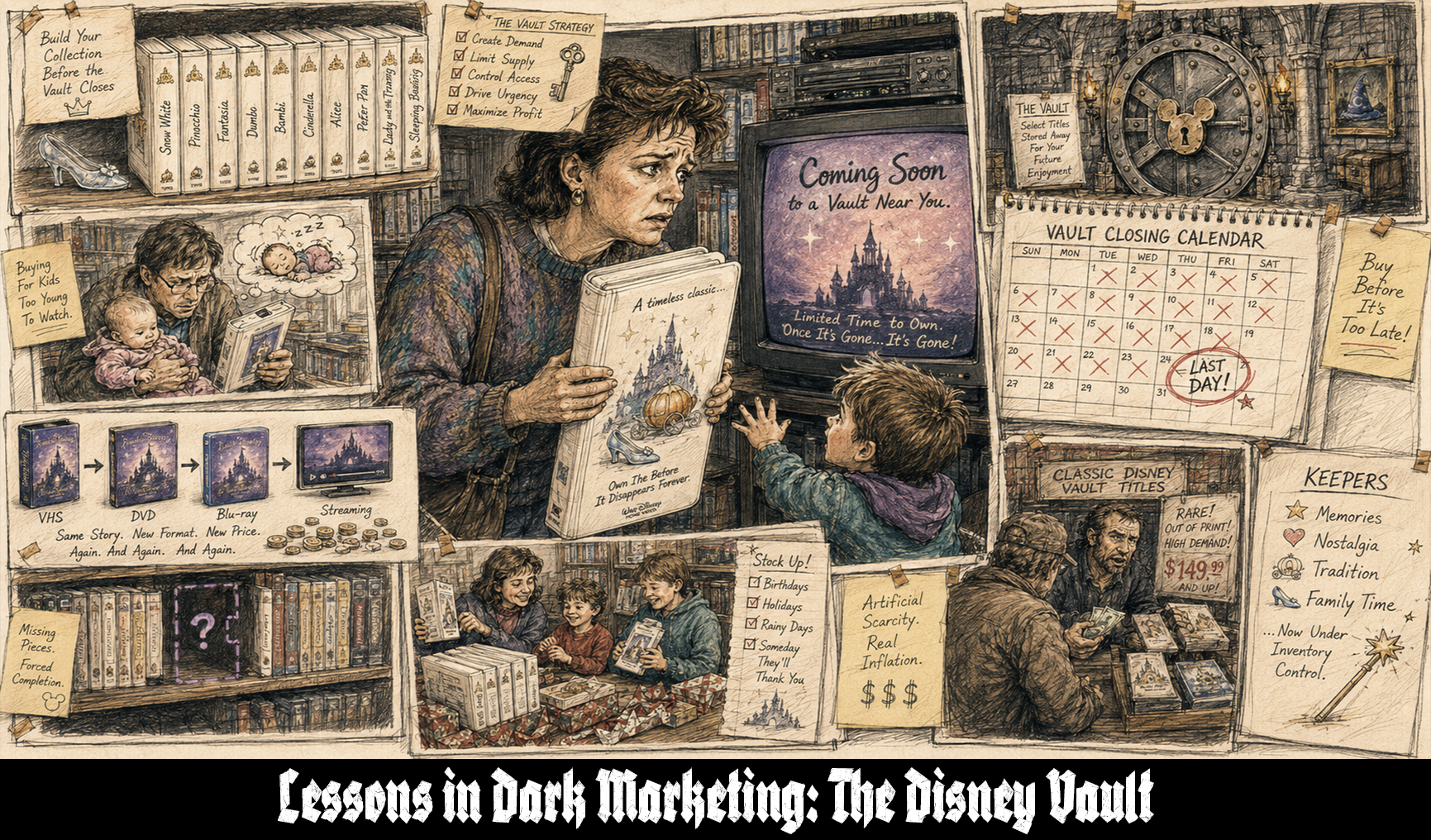
The Disney Vault: A Dark Marketing Case Study in Artificial Scarcity, Parental Panic, and Holding Childhood Memories Hostage
Disney turned timeless childhood movies into temporary consumer emergencies, using artificial scarcity, closing windows, parental guilt, and nostalgia to make families fear that waiting meant losing the magic.
-
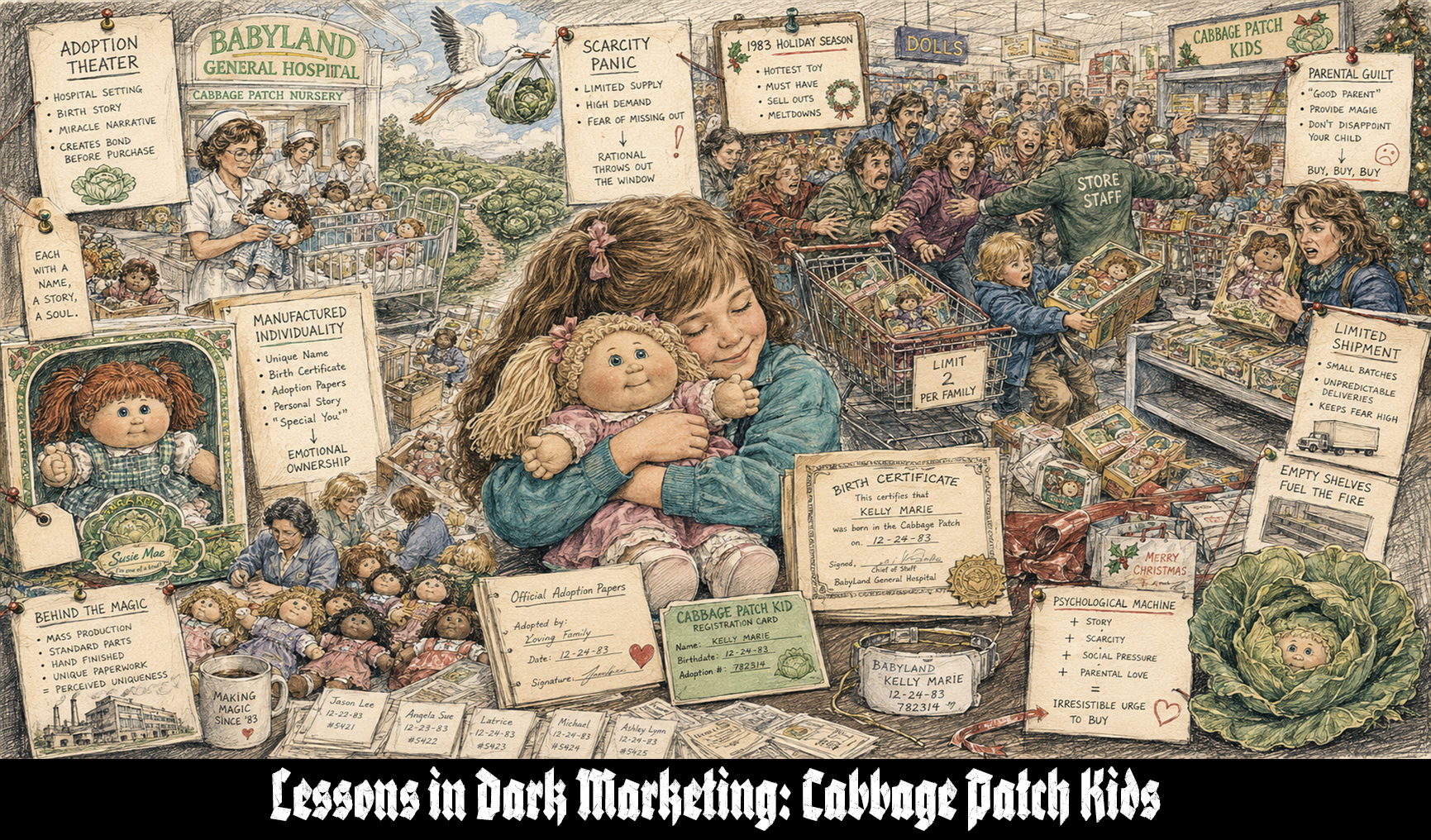
Cabbage Patch Kids: A Dark Marketing Case Study in Adoption Theater, Holiday Hysteria, and Mass-Produced Individuality
Cabbage Patch Kids turned adoption theater, parental guilt, manufactured individuality, and Christmas scarcity into a retail frenzy where buying a doll started to feel like rescuing a child.
-
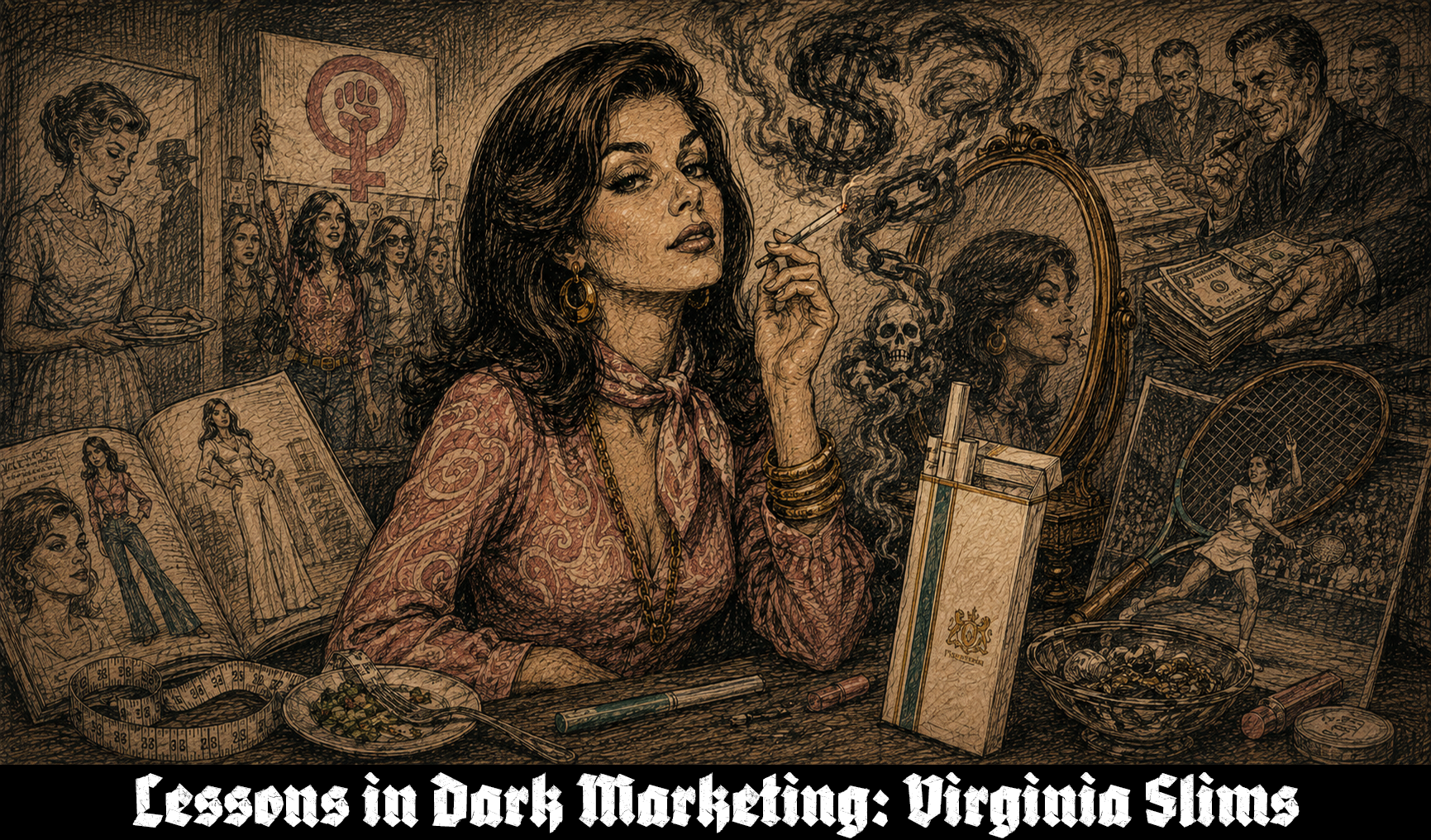
Virginia Slims: A Dark Marketing Case Study in Weaponized Feminism, Fashionable Poison, and Liberation as a Sales Hook
Virginia Slims turned women’s liberation into cigarette positioning, selling fashionable poison through feminism, thinness, rebellion, and corporate-approved empowerment. This Lessons in Dark Marketing case study breaks down how a tobacco brand borrowed the language of progress, independence, style, and female identity to make addiction look like freedom in a slimmer, prettier package.
You must be logged in to post a comment.