
Lessons in Dark Marketing
Lessons in Dark Marketing examines the tactics, tricks, branding moves, social pressure, nostalgia traps, manufactured hype, and attention games that shape what people buy, defend, share, and believe. This category breaks down the morally questionable but usually legal strategies hiding in plain sight across products, media, culture, business, and online spectacle.
-
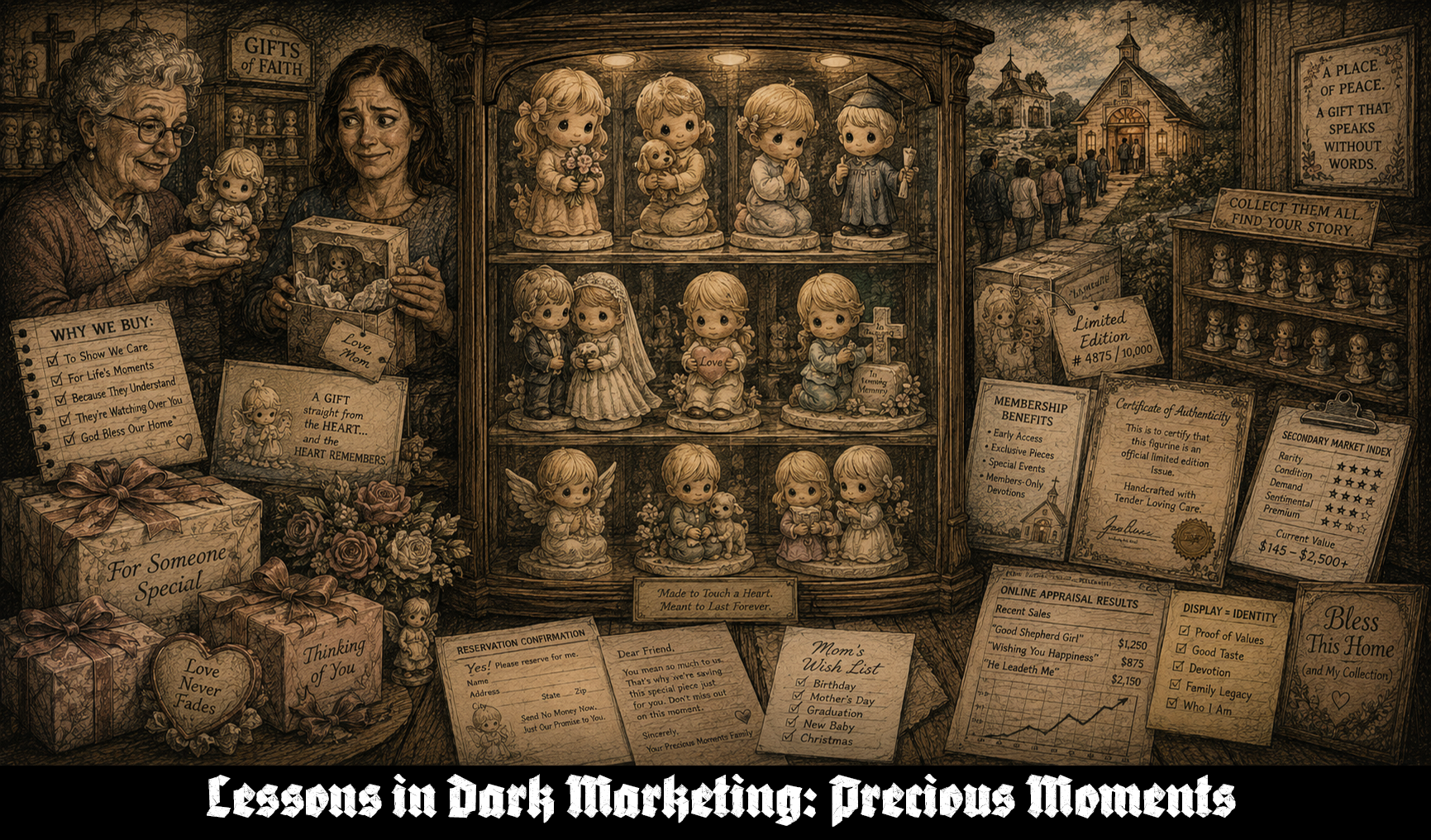
Precious Moments: A Dark Marketing Case Study in Porcelain Sentimentality, Dead-Eyed Innocence, and the Collectible Guilt Economy
Precious Moments turned love, faith, grief, family milestones, and gift-giving obligation into a collectible porcelain economy. This Lessons in Dark Marketing case study examines how teardrop-eyed innocence, religious sentiment, limited editions, collector clubs, and resale fantasies filled American curio cabinets with objects that were easy to buy, difficult to stop collecting, and nearly impossible to throw away.
-
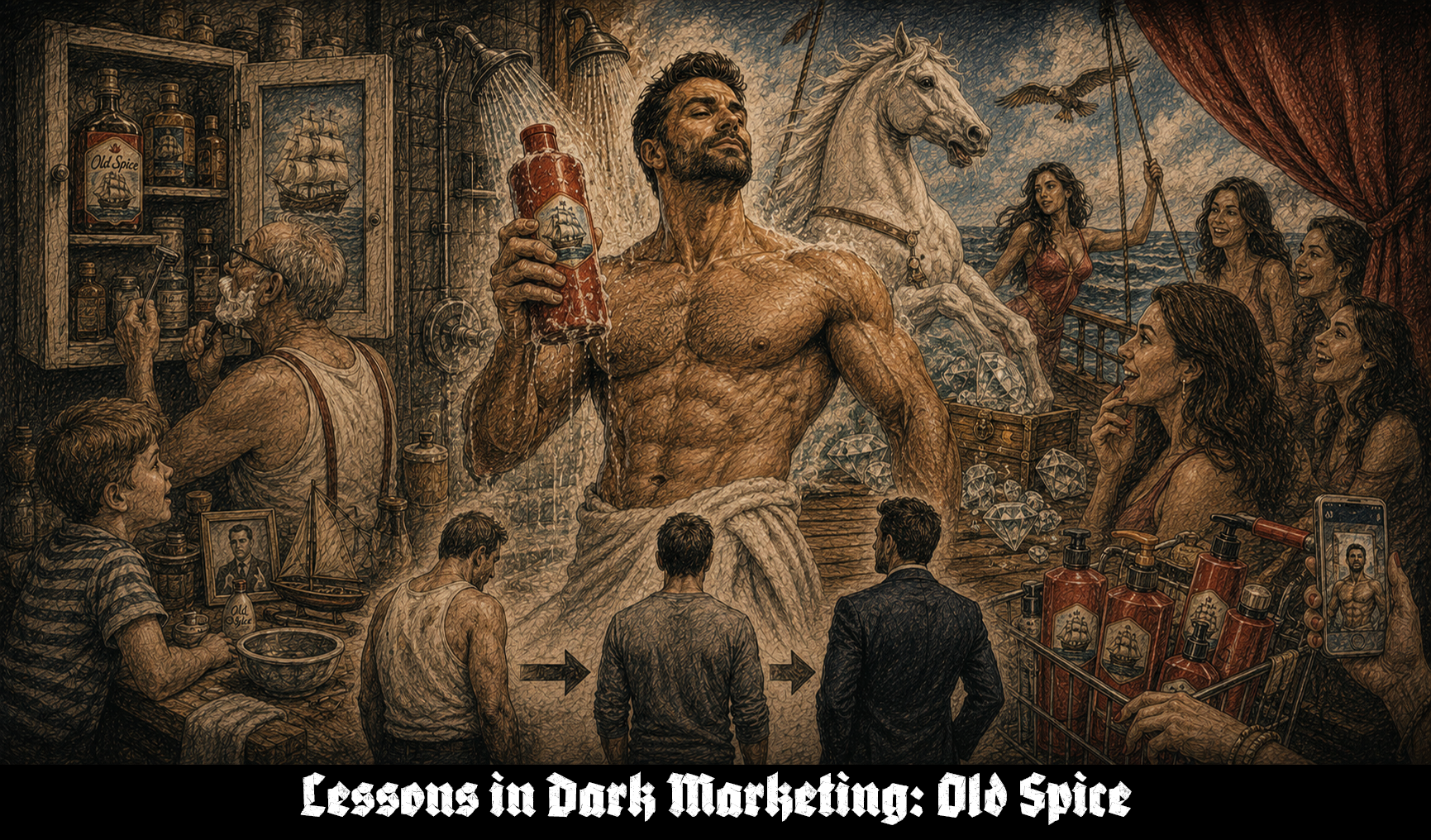
Old Spice: A Dark Marketing Case Study in Inherited Masculinity, Bathroom Authority, and the Body Wash That Sold Men a Character
Old Spice turned an aging aftershave brand into a masculine comedy machine built on insecurity, romantic comparison, and impossible confidence. This Lessons in Dark Marketing case study examines how the brand used women’s purchasing influence, absurd spectacle, social-media personalization, and a shirtless spokesman to sell men a complete character upgrade disguised as body wash.
-

TikTok: A Dark Marketing Case Study in Algorithmic Intimacy, Infinite Scroll, and the Feed That Turned Attention Into Inventory
TikTok did not just perfect short-form video. It built an attention machine that learns what stops the thumb, removes natural stopping points, turns participation into performance, and increasingly blends entertainment, advertising, influence, and shopping into the same endless personalized feed.
-
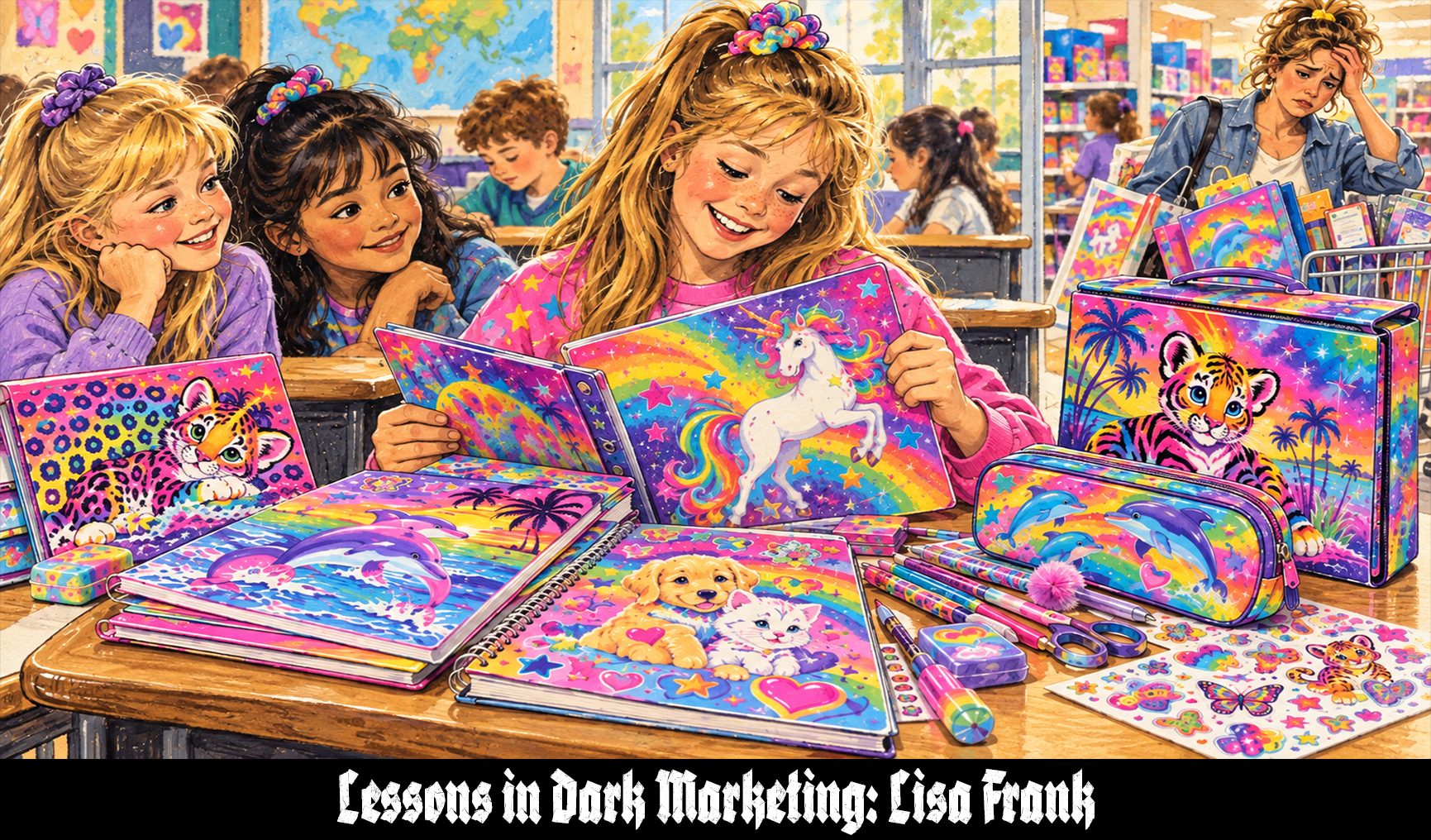
Lisa Frank: A Dark Marketing Case Study in Rainbow Escapism, School-Supply Status, and Turning Homework Into a Lifestyle
Lisa Frank turned ordinary school supplies into a rainbow identity system, using fantasy, peer visibility, and collectible design to make homework feel like lifestyle. The notebooks were practical, but the real product was status, self-expression, and a colorful world kids wanted to carry into class.
-
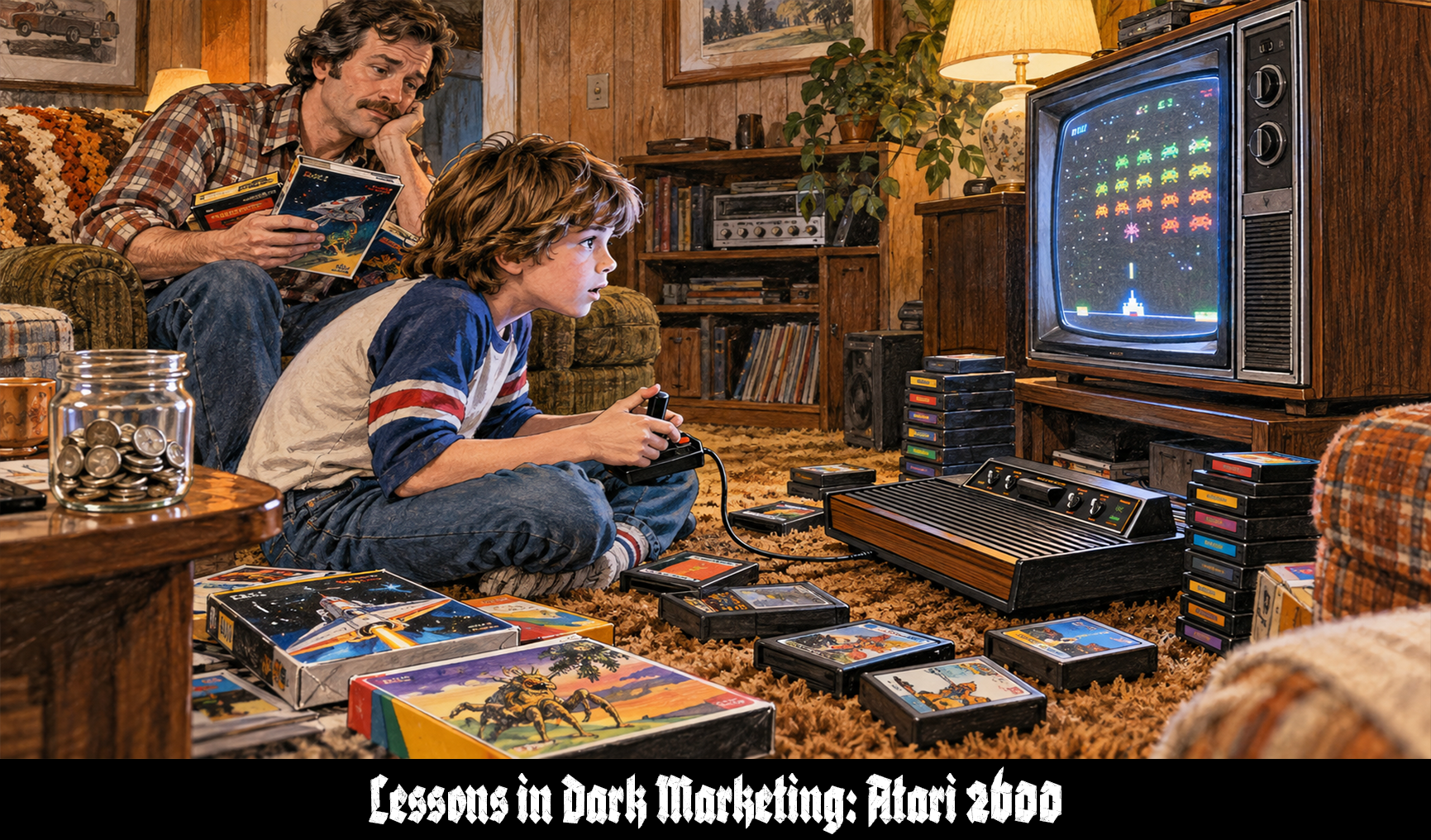
Atari 2600: A Dark Marketing Case Study in Cartridge Hunger, Arcade Envy, and the Living-Room Software Machine
The Atari 2600 turned the family television into an expandable software machine, where the console was only the entry fee and every cartridge promised another piece of the arcade at home. It taught Generation X that entertainment could always be improved by buying one more game.
-
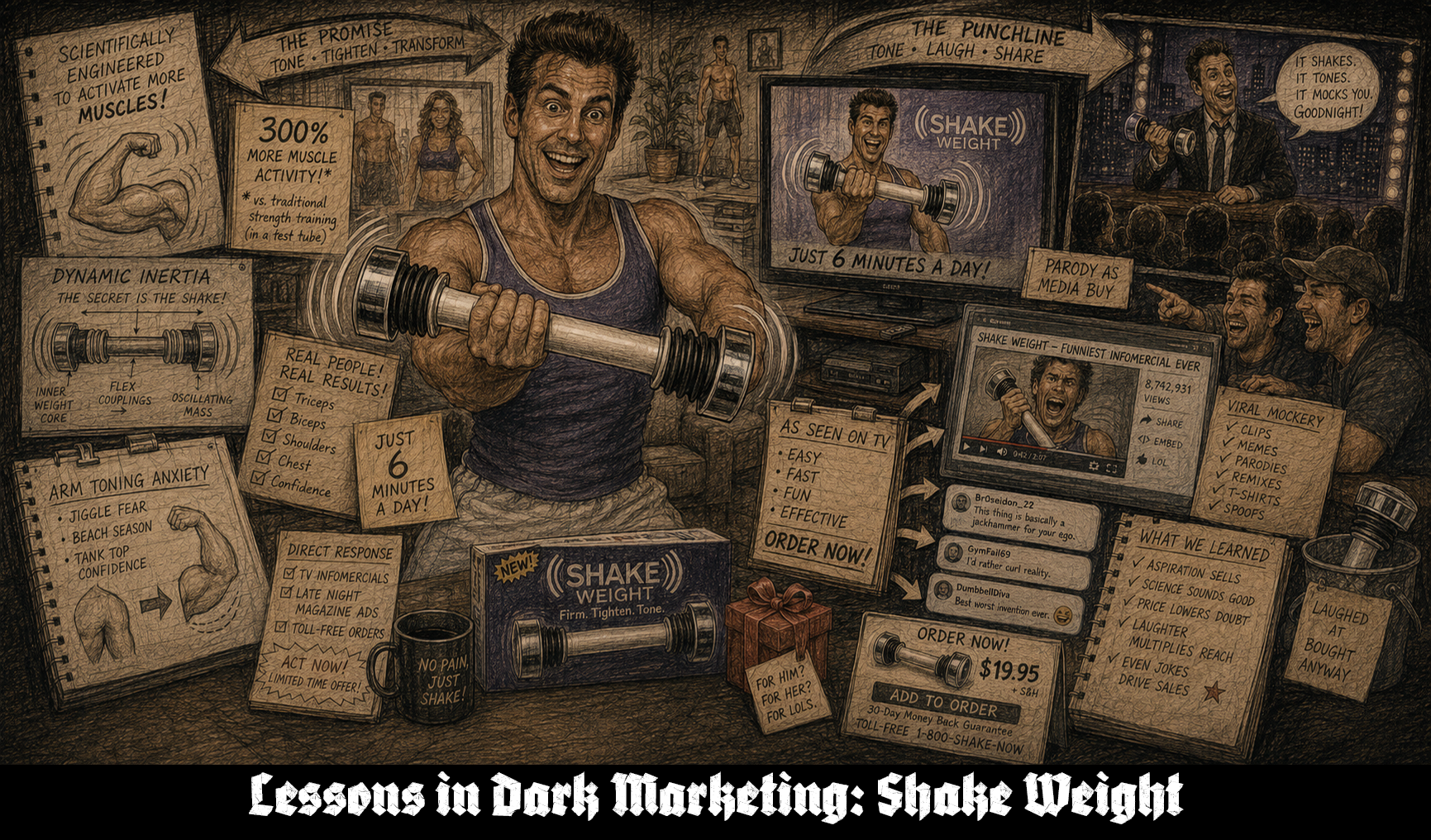
Shake Weight: A Dark Marketing Case Study in Sexual Innuendo, Public Humiliation, and the Fitness Product That Made Mockery Its Media Plan
Shake Weight turned sexual innuendo, body insecurity, exaggerated fitness claims, and public ridicule into one of the most efficient unpaid advertising campaigns in infomercial history. This Lessons in Dark Marketing case study examines how a spring-loaded dumbbell became a national joke, viral spectacle, novelty gift, and profitable lesson in turning mockery into media reach.
-
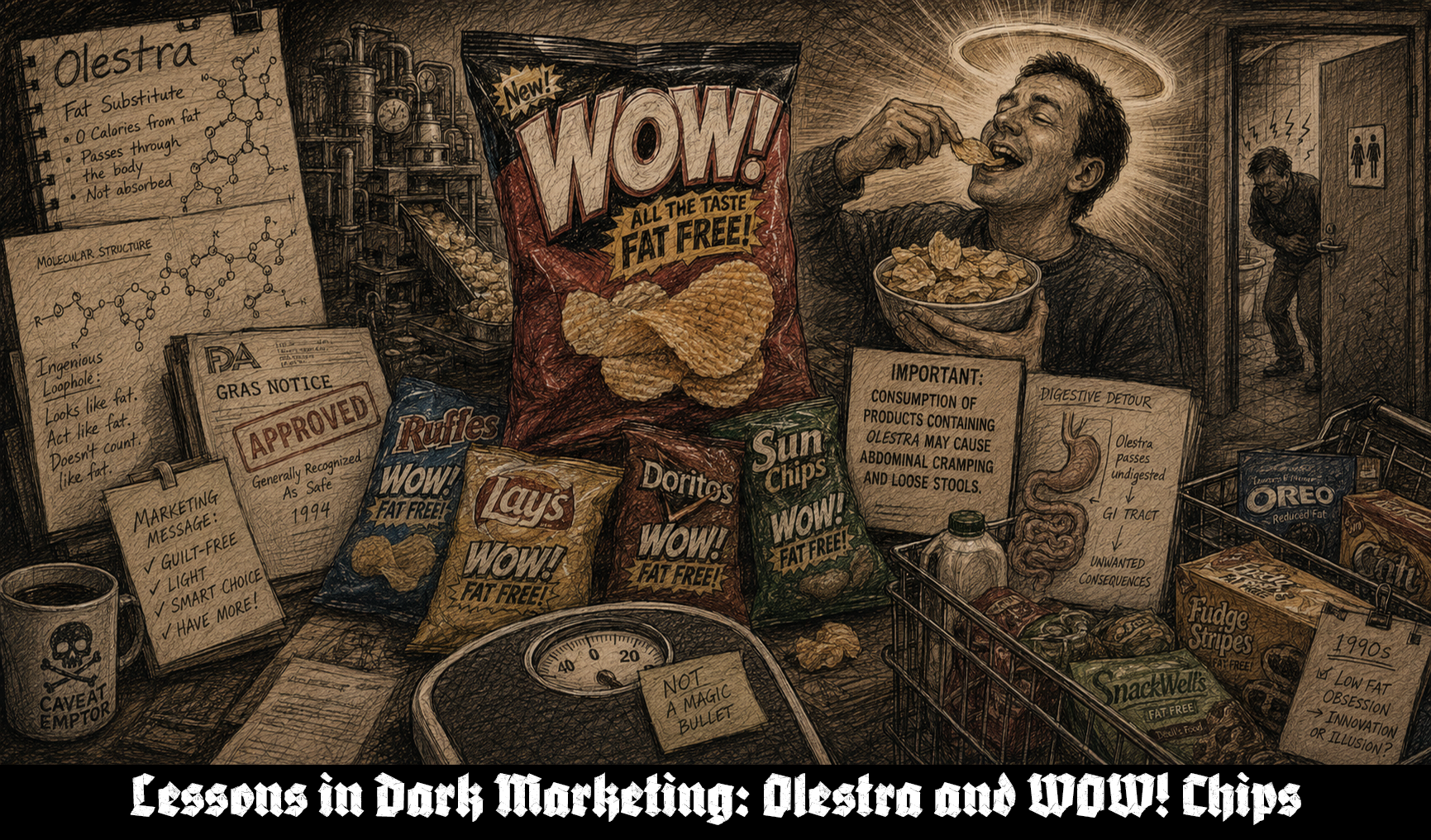
Olestra and WOW! Chips: A Dark Marketing Case Study in Fat-Free Panic, Scientific Loopholes, and the Snack Food That Outsourced the Consequences
Olestra and WOW! Chips promised Americans they could keep the crunch, lose the fat, and outsource the consequences to food science. This Lessons in Dark Marketing case study examines how 1990s low-fat panic, familiar snack brands, scientific authority, and guilt-free packaging turned a synthetic fat substitute into a national experiment in nutritional loopholes and digestive regret.
-
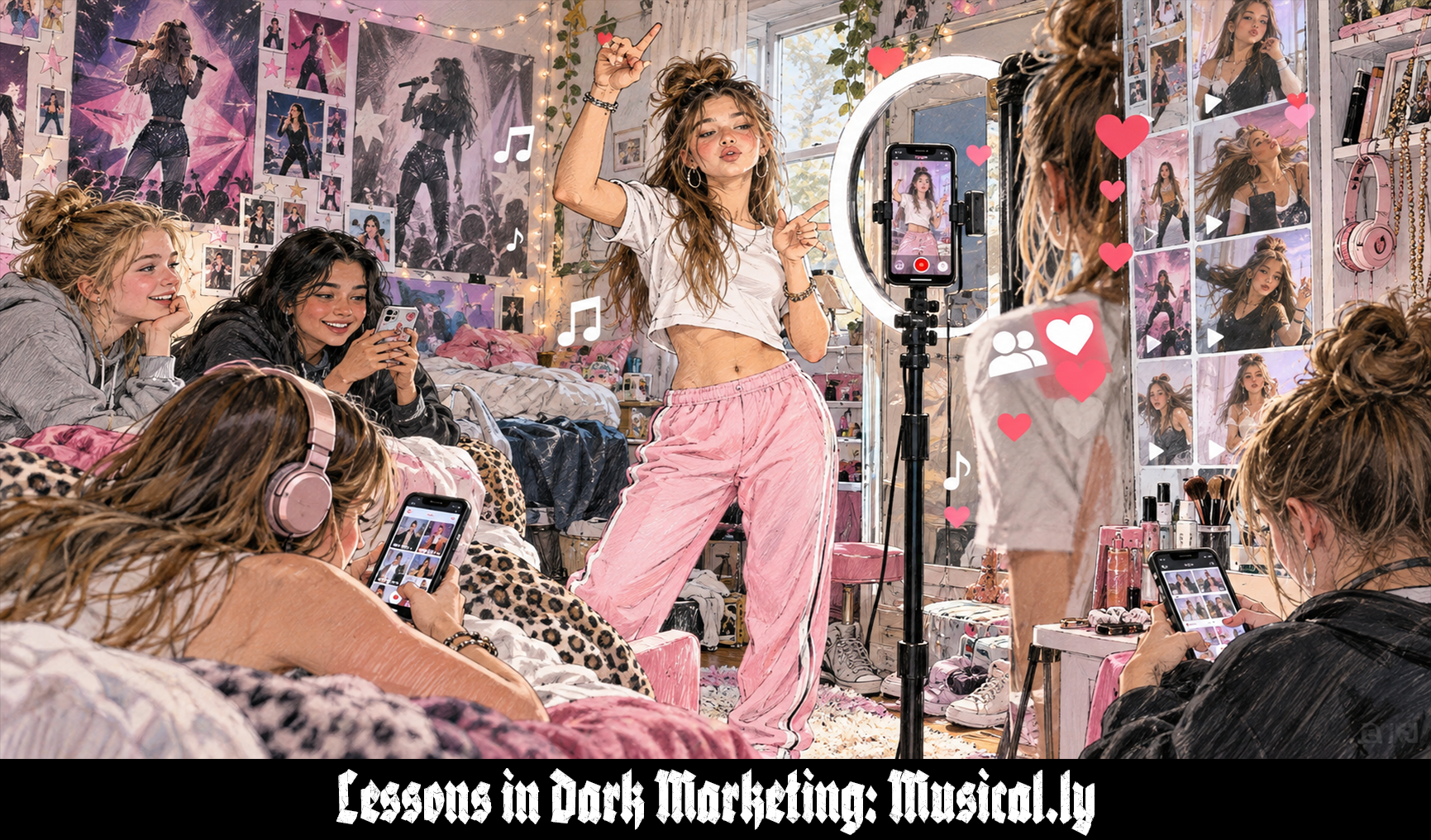
Musical.ly: A Dark Marketing Case Study in Borrowed Pop Stardom, Fifteen-Second Fame, and the App That Turned Attention Into an Audition
Musical.ly turned the ordinary bedroom into a miniature stage, where borrowed pop songs, short-form performance, likes, followers, and repetition made attention feel constantly within reach. This case study examines how the app transformed self-expression into an always-on audition and helped build the behavioral blueprint for the short-form social media economy that followed.
-

Go-Gurt: A Dark Marketing Case Study in Spoonless Rebellion, Kid Autonomy, and Turning Yogurt Into a Toy
Go-Gurt turned yogurt into a portable toy, selling parents convenience while selling kids autonomy, novelty, and rebellion against the spoon. The tube did not just change how yogurt was packaged because it changed where, when, and why children wanted to eat it.
-
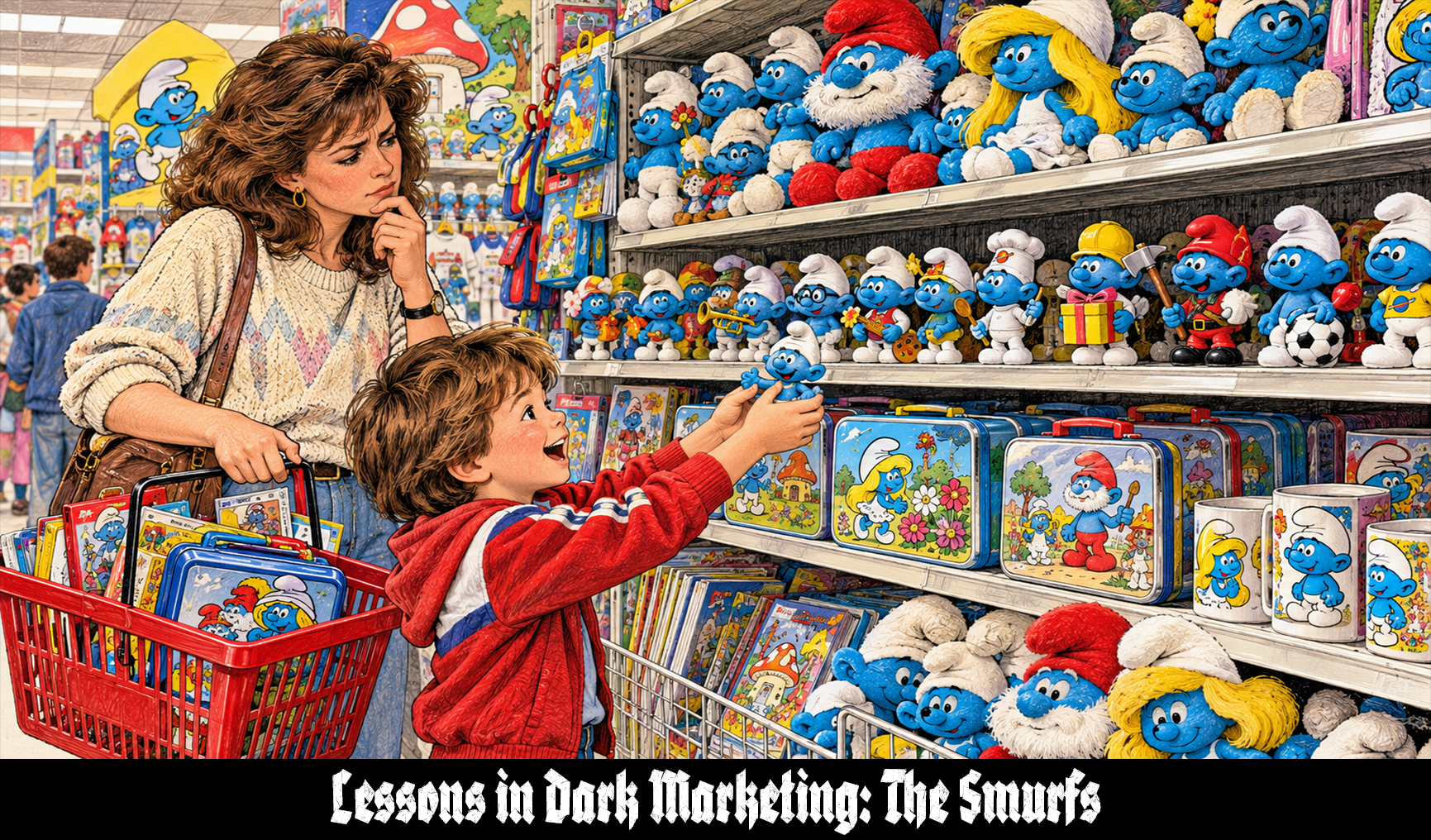
The Smurfs: A Dark Marketing Case Study in Blue Uniformity, Personality SKUs, and Saturday-Morning Saturation
The Smurfs turned tiny personality differences, Saturday-morning repetition, and relentless licensing into a blue consumer ecosystem where one cartoon village became dozens of characters, products, and reasons to buy again.
-

Marlboro: A Dark Marketing Case Study in Cowboy Masculinity, Manufactured Freedom, and the Brand That Sold Death as Independence
Marlboro transformed a filtered cigarette into one of advertising’s most powerful symbols of masculinity, freedom, and American independence. This Lessons in Dark Marketing case study examines how cowboy mythology, open landscapes, sports sponsorships, and personal-choice language helped disguise nicotine dependence as rugged individualism while disease and corporate profit remained outside the frame.
-

Pop Mart and Labubu: A Dark Marketing Case Study in Blind-Box Probability, Designer-Toy Scarcity, and Paying Before You Know What You Bought
Pop Mart turned Labubu from a strange little designer toy into a global collecting machine built on blind-box suspense, scarcity, resale culture, fashion signaling, and the thrill of not knowing exactly what you paid for. This case study breaks down how genuine artistic appeal became the foundation for one of the most effective repeat-purchase systems in modern consumer culture.
You must be logged in to post a comment.