
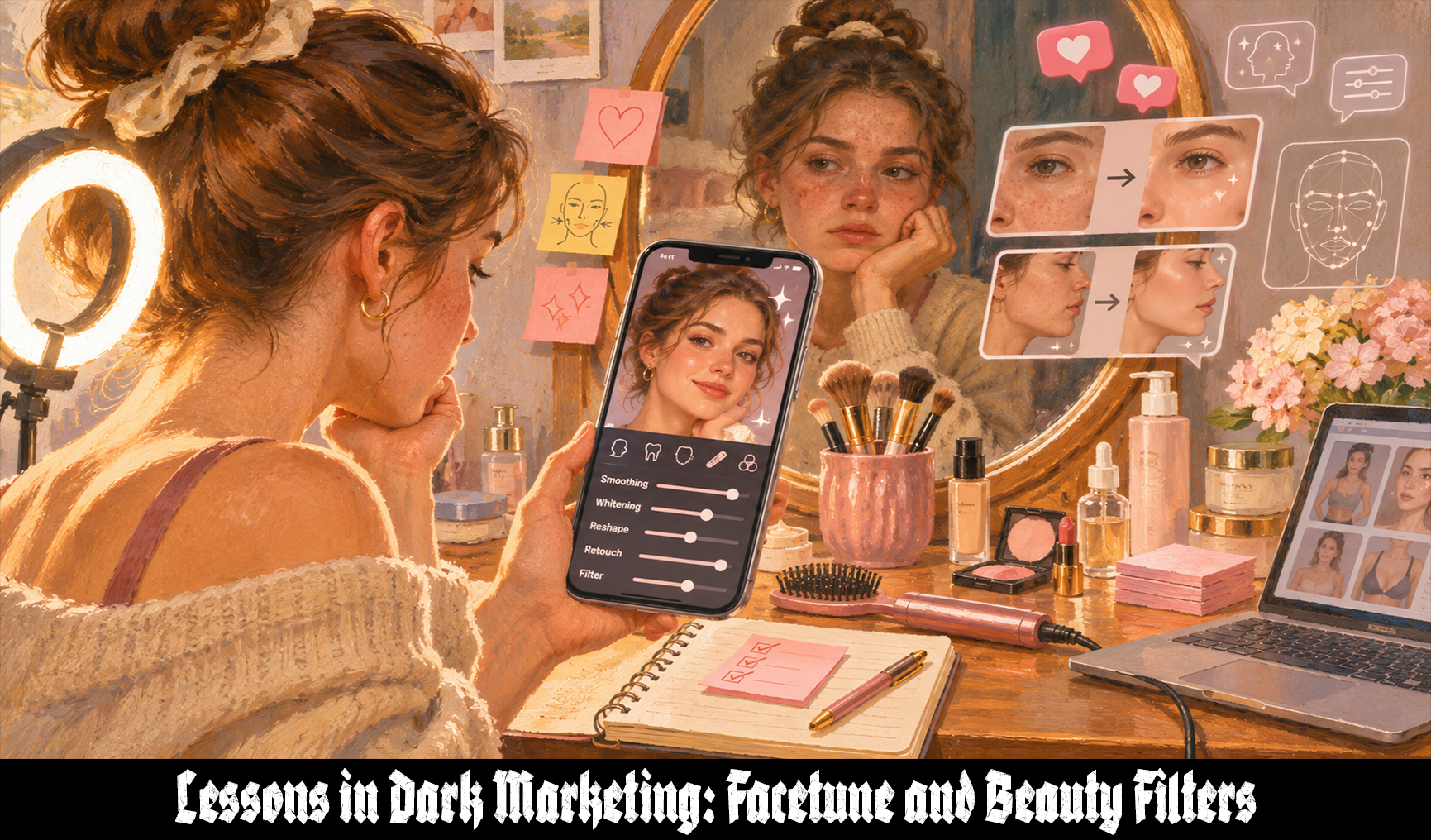
The photograph was fine until somebody opened the editing app. The lighting was a little uneven, the smile looked natural, and a perfectly ordinary human face contained several perfectly ordinary human features, including pores that had apparently committed the unforgivable offense of existing in public. Then came the corrections: smooth the forehead, whiten the teeth, brighten the eyes, remove the blemish, soften the shadows, narrow the nose just slightly, sharpen the jawline without making it obvious, and adjust whatever else might interfere with the impression that this photograph had simply captured a person who woke up looking professionally retouched.
Twenty minutes later, the person in the picture looked fantastic. The person holding the phone, meanwhile, had developed several new concerns about a face they had been reasonably comfortable wearing for years, and a perfectly pleasant picture from Saturday afternoon had become an unpaid quality-control inspection conducted by the least forgiving art director in America. Somewhere between correcting a bad photograph and redesigning a human being, the camera stopped documenting reality and began issuing performance reviews.
For the person posting the picture, the result might be liberating. They might finally like the photograph, feel less self-conscious about a temporary breakout, have fun trying a new look, or use editing tools to express something more theatrical than a camera could capture by itself. Those benefits are real, and pretending everyone who touches a beauty filter is a helpless victim would be intellectually lazy. The interesting commercial problem begins when one correction establishes a new reference image, that reference image begins to feel like the acceptable version of the face, and the unedited face starts looking like a problem that needs fixing before the next photograph.
Facetune put professional-looking portrait retouching into ordinary pockets during the early smartphone era. Its developer, Lightricks, was founded in 2013, and Facetune’s own history places the original app’s release in 2014; the brand later expanded from photo editing into video retouching, artificial-intelligence features, and paid subscription tools. Meanwhile, Snapchat introduced augmented-reality Lenses in 2015, Instagram launched face filters in 2017, and later platforms developed increasingly convincing ways to alter a face live while the person watched themselves on screen. These were distinct products and business models, but together they moved retouching from the specialist’s workstation to the camera viewfinder, the social feed, and eventually the everyday expectation of what a face should look like. Sources: Facetune’s history, Lightricks, Snap’s product timeline, and Instagram’s 2017 filter launch.
By 2026, the commercial language around that transformation had become impressively polished. Facetune advertised skin smoothing, facial reshaping, virtual makeup, AI-powered headshots, video retouching, and a VIP subscription; its own marketing encouraged customers to refine what the camera captured until the result better matched their vision. A consumer could purchase access to tools for fixing individual photographs, while a platform could provide live beautification for free because a more flattering camera encouraged creation, sharing, and repeat use. The same cultural appetite could then make room for makeup demonstrations, skincare marketing, cosmetic procedures, creator sponsorships, and another round of products promising to close the gap between the face in the mirror and the one on the screen. Source: Facetune’s app listing.
That’s the distinction this case study has to examine. Facetune sells editing capabilities, social platforms use filters to make camera-based participation easier and more rewarding, and advertisers benefit when digitally perfected appearances set the visual atmosphere in which their products are judged. No single company invented human insecurity, nobody needed a smartphone to compare themselves with somebody attractive, and a retouching tool is capable of perfectly legitimate use. The darker system emerges when comparison, correction, approval, and commerce become so tightly connected that a customer can spend years polishing an appearance whose definition of acceptable keeps moving.
The Touchscreen Put the Retouching Department in Everybody’s Pocket
Professional portrait retouching once involved equipment, expertise, money, and a fair amount of deliberate effort. Magazine covers and cosmetics campaigns could present suspiciously immaculate faces, but the machinery behind that perfection lived somewhere inside professional publishing and advertising. Ordinary people knew those images had been prepared because most ordinary people did not have access to the same preparation, which preserved at least a little distance between the celebrity on the cover and the person examining the cover in a grocery-store checkout line.
Smartphones eroded that distance. Facetune helped make corrections to skin, teeth, facial features, and portrait presentation accessible through tools designed for people who had no reason to learn professional image-editing software. A visible blemish became a few taps rather than a retouching assignment, while more substantial changes gradually became approachable through interfaces built for fingers instead of trained technicians. The consumer acquired a genuine new capability, but the lowered barrier also meant there was considerably less practical resistance between feeling dissatisfied and acting on the dissatisfaction.
Once a process becomes simple enough to perform on every photograph, it can stop feeling like special treatment and start feeling like basic preparation. A person who would never have hired someone to alter a family snapshot can still spend twenty minutes altering it themselves because the tool is already on the phone, and the next correction seems inexpensive once the first has been made.
This is dark marketing principle number one: When a costly specialist service becomes effortless consumer software, the market expands from occasional use to habitual self-correction.
The retouching department finally became affordable enough to move into the house, and it wasted very little time finding things to complain about. The equipment got smaller, the invoice got cheaper, and suddenly an ordinary family photograph was being reviewed like a national cosmetics campaign.
The First Correction Made the Second One Easier
A small adjustment is easy to rationalize. Removing a temporary blemish, correcting unfortunate lighting, or making a smile less washed out can feel like restoring what the camera should have captured in the first place, especially when phone lenses, compression, and exposure do not always flatter the subject. That reasonable starting point is why the editing interface matters more than a crude lecture about vanity. People often begin with a defensible correction, not a five-year plan to become an entirely different person.
Once the image looks better after one adjustment, the original image begins to serve as a before picture. Nearby details now compete with the improved feature, and the interface makes the next change easy to attempt, compare, reverse, and repeat. A smoothed cheek can make an untreated forehead appear more textured; brightened teeth can make the surrounding skin seem duller; a sharpened jaw can suddenly make the nose look larger by comparison. The person may have opened the app to address one concern, only to discover a little ecosystem of concerns revealed by the first successful edit. The commercial opportunity lies in converting correction into a continuing sequence rather than a completed task.
This is dark marketing principle number two: Once improvement becomes the visual baseline, every remaining imperfection becomes easier to notice and easier to sell against.
A tool that solved one problem has a delightful habit of helping the customer discover several more. By the time the customer reaches the last correction, the original purpose of opening the app may have disappeared somewhere beneath six perfectly reasonable improvements.
The Slider Made Beauty Look Like a Technical Problem
A slider communicates that some qualities exist on a measurable continuum with a user-controlled optimum. Brightness is a technical attribute of an image, so adjusting brightness seems ordinary; when a similar control changes eye size, cheek shape, jaw definition, or skin texture, the interface quietly borrows the authority of technical adjustment and applies it to human appearance. The person begins manipulating features as though the face were a design file containing settings that could be calibrated for better performance.
That precision is seductive because it replaces vague dissatisfaction with something that appears actionable. Somebody who thinks their face looks tired can move a control and observe a cleaner image immediately, which feels like progress even when the original problem was no more than being tired on a Tuesday. The software does not have to declare the face defective; the interface supplies controls whose existence suggests these are features worth optimizing. Facetune’s contemporary product descriptions openly market tools for reshaping, whitening, smoothing, and refining, which makes the categories commercially visible rather than speculative. Source: Facetune on the App Store. The control is useful, and utility is exactly why it can be persuasive.
This is dark marketing principle number three: An editable interface can transform subjective beauty standards into apparent technical settings, making personal comparison feel like optimization.
Nothing says healthy self-acceptance quite like discovering your jawline has an adjustment percentage. Somewhere between smoothing a forehead and moving a slider, personal preference starts looking suspiciously like a calibration error.
One-Tap Beauty Removed the Moment of Deliberation
Manual retouching at least requires the person to identify a feature and choose a change. Automated enhancement eliminates much of that pause by offering a ready-made result that can be applied before the user has decided which details, if any, actually need correction. The convenience is substantial for someone rushing to prepare a photograph, but automation also puts the machine in charge of defining what improvement looks like.
The distinction is commercially important because a suggested enhancement can become an implied recommendation. When an interface displays an improved version immediately, it gives the customer a comparison they did not previously request, and comparison has a way of making the original less satisfying. Facetune markets quick editing, AI enhancement, and one-tap video retouching as practical shortcuts, while its paid features monetize access to increasingly sophisticated versions of the same convenience. Source: Facetune video retouching. The user still decides whether to keep the effect, and that agency should not be ignored. The sales machine benefits when choosing whether to improve becomes easier than choosing what improvement should mean.
This is dark marketing principle number four: Automated enhancement can turn a creative option into a default comparison, allowing the software to introduce dissatisfaction before the customer asks for help.
The app has already prepared your better face, and now it would like to know why you’re still using the old one. Declining the automatic fix begins to feel like making a conscious decision to look worse, which is an impressive amount of pressure to squeeze into one innocent-looking button.
The Before-and-After Comparison Made the Original Face Lose
Beauty marketing has long relied on before-and-after imagery because the contrast makes improvement easier to perceive. An unretouched photograph next to its enhanced version uses the same psychological structure, except the before image happens to be the customer’s own face. That makes the comparison unusually personal because there is no model, celebrity, or anonymous testimonial standing between the consumer and the judgment.
The mechanics are simple: show a baseline, demonstrate a visible difference, and encourage the viewer to prefer the revised version. When the baseline is a human face, however, every improvement can imply that some recognizable part of the person was previously less acceptable. A temporary correction may genuinely improve the photograph, but repeated comparisons can also train the person to inspect a version of themselves that did not previously require inspection. There is a useful difference between asking whether an edit improves the image and asking whether it improves the person. The interface rarely needs to resolve that difference because both interpretations can encourage continued use.
This is dark marketing principle number five: A before-and-after frame turns ordinary variation into visible deficiency whenever the enhanced version becomes the standard against which the original is judged.
The most ruthless person in the comparison is occasionally the one holding the phone. The app sets up the comparison, supplies the apparent winner, and leaves the customer to explain why they ever considered the original image acceptable.
Snapchat Put the Correction in Front of the Camera
Facetune made portrait editing accessible after capture, but Snapchat helped normalize a more consequential experience: seeing an altered face live while making the picture. Snapchat introduced Lenses in 2015, bringing augmented-reality effects into the camera as a routine form of communication rather than an isolated editing task. The early appeal included obvious playfulness, with comic exaggeration, animal features, and effects that were easily understood as fantasy. Source: Snap’s official history.
Play was an excellent introduction because it familiarized people with the camera as a place where a face could be changed without any special occasion. A filter that gives somebody dog ears is obviously a joke, but the interface teaches the same basic behavior that makes a skin-smoothing or face-shaping effect easy to adopt later: open the camera, select a preferred version of yourself, and communicate through that version. An augmented face becomes part of everyday social contact, not simply an image prepared for publication. The move from post-production to live preview matters because the customer starts evaluating themselves through the correction before the photograph exists.
This is dark marketing principle number six: When enhancement moves into the live camera, users can become accustomed to seeing the edited version before they encounter the ordinary image.
The camera no longer waits for you to finish living before inviting you into the retouching department. Instead of remembering a moment and later polishing the picture, the user is invited to polish the face before the moment even happens.
Instagram Made Beautification Look Like Normal Social Participation
Instagram introduced face filters in May 2017 after Snapchat had demonstrated how compelling real-time effects could become. Its early effects included playful accessories as well as subtler appearance enhancements, combining entertainment with the more polished visual culture Instagram had already encouraged. The user could participate in a familiar story-sharing format without leaving the platform or learning a separate editing tool. Source: TechCrunch’s 2017 launch coverage.
That reduced the distinction between creating a post and preparing an acceptable appearance for it. What began as a dedicated act of retouching could be integrated into the same workflow as recording a story, messaging friends, or publishing a short video. The platform gained another creative feature that increased camera use, while the customer gained a more flattering or stylized way to appear in spaces where being seen was the whole point. Instagram did not invent curated identity, and not every face filter was designed to beautify. The broader commercial consequence was that appearance alteration joined the routine equipment of social participation, placing correction beside captions, stickers, music, and other ordinary creation tools.
This is dark marketing principle number seven: Embed an appearance-changing tool inside normal communication and the enhancement can become a social convention instead of a special editing decision.
The camera acquired a beauty department while continuing to pretend it was simply helping everybody keep in touch. When the enhancement sits beside the sticker tray and the message button, it becomes much harder to recognize how unusual the whole arrangement once was.
The Invisible Filter Was More Powerful Than the Obvious One
A filter that adds cartoon antlers announces itself as a filter. A subtle effect that evens skin, softens shadows, alters proportions, and brightens eyes can leave the viewer believing they are looking at an ordinary photograph of somebody having an unusually fortunate day with genetics, hydration, and sleep. Both can be enjoyable creative tools, but they operate differently as social information.
Obvious alteration invites amusement because the audience recognizes the fiction. Imperceptible alteration can invite comparison because viewers have less reason to discount the resulting appearance as digitally produced. That creates a more demanding reference environment even when no one explicitly claims that the image was untouched. The social impact does not require every viewer to be deceived; it only requires enough uncertainty about what a normal face looks like under normal conditions. The sophistication of the filter matters because technical realism changes what people believe is achievable.
This is dark marketing principle number eight: The less visible a beauty alteration becomes, the more easily its result can circulate as an ordinary standard for other people to compare themselves against.
Dog ears never made anyone wonder why their actual ears weren’t good enough, but a flawless face can be considerably less considerate. The less a viewer can see the digital work, the more likely the person on the other side of the screen will be judged against it.
The Beauty Template Was Narrower Than the People Using It
Beauty filters are often described as personal expression, which makes their underlying design choices easy to overlook. An effect has to encode some idea of desirable skin, facial symmetry, eye proportions, nose contours, lips, jaw shape, makeup, or lighting, and those decisions are neither culturally neutral nor universally flattering. Even effects presented as subtle enhancement can privilege particular facial ideals while treating other features as candidates for correction.
A 2026 scholarly review of a decade of augmented-reality face filters across Snapchat, Instagram, and TikTok traced recurring digital beauty templates, including movement toward increasingly seamless and partly synthetic appearances. The author identified persistent emphasis on Eurocentric ideals and the diffusion of recognizable stylized faces across platforms, while also charting how changing tools and creator ecosystems influenced the available effects. That is a historical and interpretive analysis of the designs, not proof that every user adopts the same ideal or that every effect produces the same psychological response. Source: A decade of digital beauty templates. The commercial significance is the scale of the template. Aesthetic choices that once belonged to magazine retouchers can become automatic options delivered to millions of users, giving a narrow set of visual preferences the appearance of universal common sense.
This is dark marketing principle number nine: When beauty preferences are built into reusable software presets, cultural ideals can spread with the efficiency and apparent neutrality of technical defaults.
The filter may celebrate your uniqueness right up until it gives everybody the same cheekbones. One customer’s personal transformation can start looking an awful lot like the same corporate preset used on ten million other people.
The Edited Self Became Competition for the Actual Self
A person comparing themselves with a celebrity can recognize that the celebrity has professional lighting, makeup, preparation, and considerable help from the entertainment industry. The filtered version of the person’s own face creates a more intimate and potentially more frustrating comparison because the subject appears close enough to reality to feel attainable. The distance between the mirror and the phone can begin to look like a set of solvable defects.
That is the psychological novelty the old magazine cover could never offer at the same scale. The comparison is customized with the viewer’s own eyes, smile, and identity still visible, which makes the result feel less like somebody else’s beauty and more like the version of themselves they ought to be able to produce. The filtered self is always available on demand, but the mirror has the unfortunate habit of continuing to operate without software assistance.
Clinical commentators raised concerns about this development years ago. A 2018 article in JAMA Facial Plastic Surgery described the growing relevance of edited selfies to facial appearance expectations, and popular coverage used the phrase “Snapchat dysmorphia” to describe patients seeking to resemble their filtered images; the phrase is a media and clinical shorthand, not a standalone formal diagnosis that can be assigned to every filter user. Source: JAMA article record.
This is dark marketing principle number ten: An idealized version of the customer’s own identity can become a more persistent comparison target than a distant celebrity ideal.
The mirror has to compete with somebody who looks exactly like you, only with better lighting and suspiciously cooperative bone structure. That competitor never gets tired, never has a bad skin day, and never has to explain to a mirror why it cannot render software instructions in real life.
The Photograph Began to Dictate What Happened Offline
The old relationship between physical appearance and photography mostly ran in one direction. A person got dressed, went somewhere, had an experience, and possibly took a photograph of it, although there have always been exceptions involving portraits, special occasions, and public performance. As edited self-presentation became routine, the photograph gained more authority over how the person evaluated their appearance beyond the image itself.
If somebody repeatedly prefers the screen version of their face, the difference can follow them into mirrors, makeup purchases, appointments, and ordinary social interactions. The filtered image supplies a concrete example of a change that appears possible, even when the image contains geometry, skin, lighting, or proportions that cannot be reproduced naturally. This is especially important when beauty, skincare, and cosmetic-service marketing operates beside altered images, because a digitally created expectation can become an invitation to purchase a physical correction. The evidence does not justify claiming that a beauty filter automatically causes cosmetic surgery or a mental-health disorder. It supports treating digitally altered self-images as one influence among many on how appearance goals are formed and marketed.
This is dark marketing principle number eleven: When a virtual enhancement becomes an offline aspiration, a software feature can create demand that extends far beyond the original app.
The phone offers a nose adjustment in seconds, and somewhere a much more expensive industry would love to discuss the possibilities. An effect that takes a thumb gesture to preview can introduce a goal that requires real money, real risk, and possibly a consultation calendar to pursue.
Beauty Filters Changed the Way People Looked at Other People
The social cost of altered images is not confined to the person using the tool. Every retouched image enters a common visual environment where other people judge, compare, learn, and form expectations, often without knowing which elements were enhanced. A feed full of polished faces can make ordinary skin texture, asymmetry, facial movement, and imperfect lighting feel unusually visible simply because those details appear less often in the surrounding examples.
An online experiment published in Frontiers in Psychology in 2023 exposed 226 participants to three minutes of social-media imagery emphasizing conventional beauty ideals or body diversity. Body dissatisfaction increased in the conventional-ideal group and decreased in the diversity group, suggesting that the composition of the visual environment can matter even during short exposure. The study cannot establish that every filter causes this result, but it does help explain why the cumulative standards circulating through a feed are important. Source: 2023 experimental study. From a commercial perspective, comparison does not require a direct advertisement to create value for advertisers. A surrounding culture that repeatedly presents idealized appearances can make consumers more receptive to products promising a similar result, even when nobody involved sat down to organize a coordinated conspiracy.
This is dark marketing principle number twelve: A market can generate demand by changing the visual standards customers encounter before a product is ever offered to them.
The sales pitch begins in the feed, long before somebody politely suggests purchasing a serum. By the time the advertisement appears, the customer may already have spent the afternoon studying the gap the advertisement promises to close.
Social Approval Converted Appearance Into a Scoreboard
The edited photograph does not stay inside the editing application. It moves to platforms where likes, comments, shares, views, follower counts, and other forms of measurable approval can become feedback about how the person appears to the world. Those signals are imperfect measures of appearance, but they are immediate and public enough to feel meaningful, particularly to people who already care about presentation.
That creates the possibility of a testing loop. A person changes a photograph, publishes it, watches the response, and remembers what received attention; the next editing decision can incorporate the apparent lesson. Algorithmic distribution complicates the interpretation because a post’s performance reflects timing, audience, recommendations, content type, and countless factors beyond attractiveness, yet the user can still internalize the response as a personal assessment. A 2021 experiment examining self-photo modification and feedback found that appearance-focused comments increased self-objectification, while making appearance modifications was associated with lower appearance satisfaction in the study conditions. Those findings support concern about particular feedback mechanisms rather than a universal claim that compliments are harmful. Source: 2021 study on editing and feedback.
This is dark marketing principle number thirteen: When appearance is presented beside public performance metrics, users can begin treating social approval as evidence that particular corrections worked.
The face has somehow acquired analytics, and nobody asked whether it wanted a quarterly review. A like count was never designed to be an assessment of facial worth, but it can begin masquerading as one when the photograph and the scoreboard share the same screen.
The Algorithm Didn’t Need to Invent the Ideal to Reward It
It is tempting to describe the recommendation system as a villain deciding which faces are acceptable, but that overstates what outside observers can establish about every platform’s ranking logic. Algorithms typically process many signals, including user engagement, relationships, context, and content features, while the specific mechanisms and their importance vary across products. The more defensible point is that distribution systems can amplify content that people repeatedly watch, like, imitate, or share, and edited appearance can become entangled with those behaviors.
When a particular look performs well, creators have reasons to reproduce it. Other users see the successful posts, recognize the aesthetic, and experiment with similar tools, while the platforms keep supplying easy mechanisms for making visually consistent content. That produces a feedback cycle even without any explicit platform instruction demanding narrower noses or smoother skin. A visual convention becomes culturally powerful because it is repeatedly demonstrated in content that attracts attention. The danger is in how quickly observation can become interpretation. A creator may assume an appearance change caused a performance improvement that actually had many explanations, but the assumption can still guide the next post.
This is dark marketing principle number fourteen: Recommendation systems can reinforce beauty conventions through attention and imitation without explicitly programming a single official definition of beauty.
The platform never has to announce a face standard when enough successful examples are already circulating. The audience supplies the examples, the creators supply the imitation, and the system gets to describe the resulting standard as whatever people happen to prefer.
The Retouching App Found a Subscription Hidden Inside the Selfie
An individual photo editor can be sold once, but ongoing content creation creates ongoing demand. Every new picture is another opportunity for a correction, every video introduces a moving set of frames to polish, and every new feature can be introduced as the next reason to upgrade. Facetune’s contemporary model mixes free functionality with VIP access, including paid video retouching and other premium features, and promotes trial access before recurring subscription charges. Sources: Facetune FAQ and Facetune trial experience.
The business model is straightforward and legitimate when terms are clear, the features are useful, and the customer chooses the subscription knowingly. The darker opportunity lies in attaching recurring revenue to a customer concern that has no natural endpoint, because people continue taking photographs, social standards continue changing, and the image the customer considers their best will not remain the last one they want to publish. A tool that once performed an occasional fix can become part of the monthly cost of presenting oneself. An open-ended aspiration pairs beautifully with an automatic renewal, and the jagoffs selling perpetual perfection would rather market a process than announce a finish line.
This is dark marketing principle number fifteen: Subscription businesses become especially durable when their products address recurring self-evaluation rather than a problem that can be solved once and forgotten.
The face has acquired a monthly service plan, which is impressive considering it was already included with the customer. A subscription to editing tools makes financial sense when the tools are useful; the trouble begins when the customer is encouraged to believe their own appearance must remain permanently under maintenance.
The Free Trial Let the Enhanced Face Arrive Before the Bill
The free trial is a familiar and often useful way to evaluate software, but its psychological sequence deserves attention when the product alters appearance. The customer receives premium capabilities first, uses them to produce more polished images, and may integrate those capabilities into the process of preparing content before any recurring charge arrives. Facetune’s web trial messaging describes a period of VIP access followed by subscription billing if the customer does not cancel. Source: Facetune trial terms as presented to users.
This matters because the trial is not just exposure to features. It can create a temporary standard for the customer’s output, making the basic version feel inadequate when the paid capabilities disappear. Someone who now expects video smoothing, automatic enhancement, or more elaborate corrections may evaluate the charge against the thought of publishing a less polished version of themselves. That does not make a disclosed trial inherently deceptive, and no one should imply the product is hiding its subscription by default. It illustrates why free access to an identity-related improvement can be a particularly effective conversion strategy.
This is dark marketing principle number sixteen: A trial can create willingness to pay by letting customers adopt an improved reference state before asking them to decide whether to keep it.
The bill arrives after the new face has already made itself comfortable. Returning to the free version can feel less like turning off an optional feature and more like voluntarily giving back an improvement that has already become familiar.
Editing Video Removed the Last Excuse That a Photograph Was Just a Photograph
Static photographs were easy to understand as edited artifacts because people had spent decades seeing magazine images retouched. Video once carried a stronger everyday presumption of authenticity, partly because manipulating every frame convincingly required more work. Mobile video retouching weakens that distinction by allowing skin smoothing, facial adjustments, and virtual makeup to follow a subject in motion.
Facetune now sells video retouching as part of its creative toolkit, promoting features that can smooth skin, conceal under-eye shadows, reduce shine, and enhance makeup without a separate filming crew. For creators who make a living on camera, the practical benefits are obvious: less preparation time, more consistent results, and less dependence on equipment or specialized editors. The commercial implication is equally obvious: if every movement can be polished, the old boundary between a prepared photograph and apparently ordinary footage becomes harder for viewers to interpret. Source: Facetune’s video editor. Once audiences encounter altered moving faces as ordinary content, they have another reason to compare real faces unfavorably with screen appearances.
This is dark marketing principle number seventeen: When enhancement follows the subject into moving video, the visual standard escapes the edited photograph and begins influencing what viewers treat as everyday reality.
Even blinking is apparently no longer enough to prove the face came from the factory that way. The trick has left the edited portrait and moved into the ordinary video call, where reality is expected to maintain the production values of a cosmetics advertisement.
Bold Glamour Made the Alteration Difficult to Catch in the Act
In 2023, TikTok’s Bold Glamour effect demonstrated how unnerving a convincing beauty filter could become when it held together during movement. Users watched their faces acquire makeup-like contours, smoother skin, fuller-looking features, and an altered overall presentation while the effect continued tracking expressions. The familiar party trick of waving a hand across a filter to reveal a broken overlay became less reliable, which made the result feel more like a second face than a decorative layer.
Contemporary reporting described researchers and creators investigating whether machine-learning techniques contributed to the effect’s unusually convincing appearance, while TikTok did not publicly explain its technical implementation in the same level of detail. It would be careless to pretend every public guess about its architecture was confirmed, but the observable advance was clear enough: the alteration looked less like a sticker attached to a face and more like an image of the person themselves. Source: The Washington Post on Bold Glamour. That realism changes the marketing environment because the difference between seeing a fantasy and seeing an apparent possibility becomes harder to maintain. People can enjoy the novelty, mock the result, or treat it as inspiration for makeup, but the same tool can also supply a painfully detailed alternative version of their own appearance.
This is dark marketing principle number eighteen: When a beauty effect becomes technically convincing enough to hide the seams of its construction, the altered result becomes easier to mistake for an achievable personal standard.
A filter that once looked like a party trick had learned how to show up dressed as evidence. When a made-up result stops looking made up, the customer may begin treating the impossible comparison as a perfectly reasonable personal objective.
The Technology Could Change a Face Faster Than Makeup Could
Traditional beauty routines involve time, money, application, removal, personal skill, and physical limitations. Digital filters can suggest a comparable sense of transformation in seconds and sometimes alter characteristics that cosmetics cannot change at all. That difference is part of the appeal for creative experimentation, especially when somebody wants to test a style without buying products or committing to a physical change.
The tradeoff is that the digital result can erase the real-world cost of reproducing an appearance. A user sees smoother skin, larger eyes, or reshaped proportions without the years, expense, procedures, genetics, or simple impossibility that might stand between the image and an offline version. The app can demonstrate a visual possibility while leaving out the practical and biological limitations involved in making it real, which creates a peculiar kind of advertising for expectations that nobody has actually guaranteed can be met. The distinction matters most when the filter stops being treated as play and starts becoming a personal goal.
This is dark marketing principle number nineteen: Remove the cost and difficulty of a transformation from the preview and customers can begin wanting outcomes the real world cannot deliver on comparable terms.
The screen makes perfection look free, which gives the physical world an unfair opening bid. The cosmetic possibility arrives instantly, while the cost, limitations, and biological complications remain inconveniently outside the frame.
The Camera Preview Became a Place to Judge Yourself Before Anybody Else Could
Selfie cameras were already mirrors with a record button, but beautification turned them into mirrors that could improve the image in real time. Someone can open the camera, cycle through effects, compare versions, inspect details, and decide which face feels appropriate for the audience before they have taken a single picture. That process may help people who dislike unflattering photography, yet it also moves judgment forward into the moment of capture.
The person is no longer simply deciding whether a photograph is worth sharing. They may be deciding whether the version of themselves visible without modification is acceptable to present at all, and that decision can require increasingly fine distinctions between normal appearance and digital polish. The workflow encourages looking at a living face through a problem-solving interface, where every perceived flaw comes with at least one potential remedy. The behavioral cost arises from the number of chances to reconsider. A camera that can always produce a more flattering version makes it easy to postpone accepting a perfectly adequate one, and the audience need not even be present for the pressure to begin.
This is dark marketing principle number twenty: When self-presentation tools provide unlimited pre-publication comparison, the fear of judgment can move upstream into the act of taking the picture.
Nobody has commented on the photo yet, and the customer is already holding a private hearing about their pores. By the time the picture reaches another human being, it may have survived more scrutiny than most advertising campaigns receive before launch.
The Selfie Session Became Unpaid Production Labor
Filters and retouching tools make polished images easier to create, but they can also make polished images feel more necessary. The content creator, job applicant, small-business owner, student, or person trying to post one decent photograph may spend additional time choosing images, testing effects, editing frames, checking angles, and preparing a presentation that once would have been an ordinary camera snapshot. The tools save effort on individual corrections while making a higher standard of output economically and socially plausible.
That is the familiar productivity paradox of better equipment: faster execution does not always reduce total work because expectations rise alongside capability. A creator who can prepare a polished video on a phone may feel pressure to deliver professional-looking footage constantly, while somebody posting casual personal updates can begin borrowing the quality-control habits of a paid production crew. The user receives genuine creative power, and the platforms receive a continuing supply of content produced to increasingly sophisticated standards. The marketing benefit is that the audience and creator both invest more heavily in the visual environment.
This is dark marketing principle number twenty-one: A tool that lowers the cost of professional presentation can simultaneously raise the amount of unpaid preparation people consider normal.
The neighborhood selfie has somehow become a production requiring makeup, lighting, post-production, and a person who understands why the left eyebrow is underperforming. The professional photographer’s equipment has been replaced by a device in a pocket, but the expectation of professional results has somehow survived the entire trip.
The Beauty Influencer Could Sell Results the Product Didn’t Produce
Beauty advertising becomes unusually sensitive when a digital filter changes the precise feature a product claims to improve. If somebody demonstrates foundation while an effect smooths their skin, promotes tanning products through a filter that darkens complexion, or recommends cosmetics while facial reshaping makes the outcome look more dramatic, the viewer can struggle to tell how much of the visible result comes from the product. The problem is bigger than general image polish because the manipulation may affect the actual performance claim the customer is using to evaluate a purchase.
Britain’s Advertising Standards Authority confronted this directly in 2021. It ruled against advertising involving Instagram beauty filters used to promote tanning products after determining that the effects could exaggerate their efficacy, and the regulator has continued providing guidance about filters that materially distort claims. These are advertising-specific findings, not a universal ban on personal photo editing or a rule that every digitally enhanced image is automatically misleading. Source: ASA guidance on social-media beauty filters. The darker sales mechanism is a performance claim smuggled through a visual demonstration.
This is dark marketing principle number twenty-two: When an advertisement digitally supplies the result a product promises to deliver, visual persuasion can conceal the difference between the product’s performance and the editor’s work.
The foundation deserves credit for what the foundation does, but the filter should probably stop collecting its commission. The customer deserves to know whether the jar delivered the result or whether the advertising department quietly borrowed an entirely different set of tools.
Sponsored Lenses Let Brands Become Part of the Customer’s Face
Beauty modification also developed into an advertising format beyond the dedicated editing app. Snapchat’s commercial offerings include sponsored augmented-reality Lenses that brands can place inside the camera experience, with tools allowing users to interact with visual effects and sometimes try products or styles virtually. The company markets the format for brand awareness, engagement, and conversions, openly presenting participation through the camera as a commercial opportunity. Source: Snapchat advertising formats.
The proposition is powerful because the customer does not simply view a brand’s message. They put the branded experience on their own face, move through it, record it, and may share the result with friends, giving the advertiser a personal demonstration that a traditional static ad cannot provide. Virtual try-on can be practically useful because it reduces uncertainty about a purchase, but the same interaction creates attention and distribution for the brand. This is why the line between play and promotion deserves scrutiny. The experience can be enjoyable and still function as advertising, and participation can still produce commercial value even when the person never buys anything.
This is dark marketing principle number twenty-three: A branded camera effect can turn the consumer’s identity and social relationships into the demonstration surface for the advertisement itself.
The advertiser used to buy space beside your photograph; now it can rent a place directly on your face. The product demonstration now wears the customer’s smile and travels to their friends, which is quite a promotion for a campaign disguised as a little camera fun.
The Filter Marketplace Turned Appearance Into a Creator Economy
Filters were eventually designed by far more people than the platforms themselves. Creator tools let artists, developers, agencies, and enthusiasts build augmented-reality effects, while individual designs circulated through shares, discoverability systems, and online communities. This expanded experimentation enormously, producing humor, special effects, identity play, cosmetics demonstrations, and increasingly sophisticated appearance changes through a distributed production culture.
The business significance is that platforms could encourage outside creators to supply new reasons for people to open the camera. Every effect added variety to the product without requiring the company to internally conceive every experience, and the creator gained a potential audience for their work. Snapchat continues offering Lens Studio and other tools for building these experiences, including options explicitly intended for advertiser campaigns. Sources: Snapchat’s Lens tools for advertisers and how Snapchat ranks Lenses. The same flexibility makes moderation and cultural judgment harder because the inventory of filters can grow faster than any single brand team could manually curate in detail.
This is dark marketing principle number twenty-four: Turn an attention-driving feature into a creator ecosystem and the platform can outsource much of the novelty while retaining the audience relationship.
The creative community gets an outlet, and the company gets an astonishing number of volunteers building reasons to reopen its camera. Novelty keeps arriving from outside the payroll, while the platform holds the storefront, the distribution system, and the power to decide which creations get noticed.
The Platform Could Disappear the Beauty Standard Overnight
The irony of a user-created filter ecosystem is that creators do not necessarily own its distribution infrastructure. Meta announced in 2024 that it would discontinue third-party Meta Spark effects beginning January 14, 2025, removing creator-built augmented-reality effects from Instagram, Facebook, and Messenger while preserving first-party effects. The decision affected people who had built audiences, businesses, and creative practices around the platform’s tools, demonstrating how dependent their work was on decisions made elsewhere. Source: Reuters on Meta Spark’s closure.
The shutdown was about far more than beauty filters, and it should not be rewritten into evidence of a specific campaign against beautification. Its lesson for this case study concerns ownership and dependence: a creator can help make a visual language popular without controlling whether the host platform continues offering that language. The same companies that normalize a behavior can later withdraw, rearrange, or replace the tools supporting it. That should sound familiar to anybody who has watched an online audience evaporate after a platform changes direction.
This is dark marketing principle number twenty-five: When cultural participation depends on proprietary creative infrastructure, the platform can capture years of community value while retaining the power to change the rules of participation.
You can spend years perfecting the virtual face, and the landlord can still demolish the mirror. The creators can own their imagination and still discover that the infrastructure hosting their work belongs to somebody with a very different set of priorities.
The Research Was Worrying Enough Without Exaggerating It
It is possible to criticize the beauty-filter economy without declaring that every teenager using a selfie effect is developing a disorder. Research has produced important signals of risk, but results vary by population, exposure, measurement, and whether a study examines a momentary reaction, a longer pattern of use, or an existing body-image concern. Those differences matter because the mechanisms of social comparison and self-editing are complicated, and flattening the evidence into a single frightening slogan makes the analysis weaker.
A 2020 experiment published in Body Image studied 130 women aged 18 to 30 who viewed different kinds of Instagram images before taking and editing selfies. Researchers reported increases in negative mood and facial dissatisfaction after the selfie-editing task, and a greater degree of editing was associated with a greater increase in facial dissatisfaction. A separate 2018 experiment involving 110 female undergraduates found worse mood and body-image outcomes after selfie taking and posting relative to a control group, including when retouching was allowed. Sources: 2020 selfie-editing experiment and 2018 selfie-posting experiment. Those studies are significant, but they do not establish an identical effect for all genders, ages, personalities, or styles of editing. They show why the interaction between editing and self-evaluation deserves more than a dismissive shrug, especially when the same practices are encouraged at massive scale.
This is dark marketing principle number twenty-six: A commercial feature deserves scrutiny when credible research identifies meaningful risks, even if the harms are neither universal nor identical for every customer.
You don’t need to diagnose the entire internet to recognize that turning every selfie into a facial audit may have a downside. A reasonable response starts with understanding the evidence and the design, rather than assigning a diagnosis to everyone who has ever used the smooth-skin setting.
The Evidence Also Complicated the Simplest Horror Story
Another study examining Snapchat Lenses found associations between taking more Lens photos and greater body-image concerns, but its experimental component provided little evidence that taking a selfie with a Lens immediately lowered appearance satisfaction compared with an appearance-neutral condition. That matters because it separates a correlation in everyday behavior from the narrower question of whether one experimental exposure produces a detectable immediate change. Source: Snapchat Lenses and body-image concerns.
The mixed findings should sharpen the criticism rather than weaken it. People may choose beauty filters because they are already concerned about appearance, repeated use may interact with those concerns, and individual responses can depend on social context, personal expectations, and the type of effect. Some users experience humor, agency, and experimentation; others report greater comparison pressure. A platform that serves millions of both groups should not assume the same design has the same consequences for everybody. Marketing has a long history of converting an uncomfortable correlation into a convenient story for selling a solution.
This is dark marketing principle number twenty-seven: Evidence about behavioral risk must distinguish what a product causes from what vulnerable or motivated customers bring to the product.
The case against manipulative design becomes considerably stronger when the science is allowed to say what it actually found. Good criticism survives uncertainty because it can distinguish what researchers actually measured from what makes the most dramatic headline.
Boys and Men Had Their Own Version of the Problem
Beauty-filter criticism often focuses on girls and young women because much of the best-known research concerns those populations and because cosmetic advertising has historically directed enormous pressure toward women. That focus is understandable, but a technology that can sharpen jaws, adjust muscularity, alter hair, change facial hair, and refine professional presentation does not stop operating when the subject is male. The relevant standards can differ, but the temptation to move a face or body closer to a preferred image is not restricted to one gender.
A study published in Body Image in 2019 examined selfie editing, posting, and body dissatisfaction among men and women, identifying associations between image-related social-media practices and dissatisfaction in both groups. Those findings do not imply identical experiences or marketing strategies, but they support examining a wider market than the caricature of teenage girls worrying about eyelashes. Source: Selfie editing and body dissatisfaction among men and women. The commercial opportunity changes presentation according to the audience while keeping the optimization logic intact.
This is dark marketing principle number twenty-eight: Appearance technologies can broaden their market by translating the same correction mechanics into different cultural ideals of attractiveness, youth, strength, and professionalism.
One customer gets offered a smaller nose, another gets a sharper jaw, and the software accepts both payments without developing a philosophical position on either. The aesthetics change with the audience, but the sales pitch keeps returning to the same proposition that the face on the screen could stand a few adjustments.
Teenagers Became the Test of How Far the System Should Go
Adolescence involves unusually intense attention to social belonging, self-presentation, and peer approval, which makes age an important variable in the design and distribution of beauty effects. A teenager may encounter edited images as everyday communication long before developing a mature understanding of what an effect changes, how public approval relates to self-worth, or how beauty marketing profits from comparison. That does not make teenagers passive or incapable of recognizing manipulation, but it does raise the stakes when the product encourages repeated appearance evaluation.
In 2024, TikTok announced plans to restrict certain appearance-altering effects for users under 18, while distinguishing those effects from obviously humorous filters such as animal ears. The announcement also included clearer descriptions of appearance changes and updated guidance for effect developers. Reporting at the time described a planned rollout rather than proof that every proposed safeguard had already become fully effective everywhere, a distinction worth preserving. Source: TikTok’s age-restriction announcement coverage. The regulatory and product-design lesson is larger than one platform. A feature can be entertaining for adults while presenting different risks for children, particularly when the effect changes an ordinary facial feature into something the child begins evaluating against an idealized alternative.
This is dark marketing principle number twenty-nine: An experience that appears harmless as adult self-expression can require different limits when it repeatedly trains younger users to assess their developing appearance against artificial standards.
The digital dog ears are unlikely to ruin anybody’s self-image, but the imaginary face transplant deserves a more serious conversation. A child deserves more than a disclaimer when the tool repeatedly suggests that their perfectly ordinary developing features should be exchanged for a software-designed alternative.
Platforms Eventually Had to Acknowledge the Stakes
By 2026, the subject had moved beyond media criticism into publicly described platform commitments. In an August 2026 announcement concerning an agreement with state attorneys general, Meta said it would extend restrictions on cosmetic-surgery filters for teens to include extreme makeup effects, alongside other teen-focused changes involving feeds, autoplay, and visible reaction counts. The announcement is evidence of stated commitments and product direction, not independent proof that every measure is perfectly enforced in every account or jurisdiction. Source: Meta’s August 2026 announcement.
This is notable because businesses that spent years normalizing digital appearance modification were now explaining where some of those tools should become less accessible to younger users. The companies were not necessarily abandoning entertainment, creative experimentation, or cosmetic effects for adults. They were acknowledging that certain kinds of alteration and certain audiences create risk strong enough to influence product design. The exact boundaries remain contested and difficult to enforce, especially when similar effects can be created in other applications and uploaded afterward.
This is dark marketing principle number thirty: When a growth feature later requires age limits and safety commitments, the business has acknowledged that user engagement alone is an insufficient measure of product success.
A system can produce beautiful engagement graphs while leaving some of the people generating them feeling considerably less beautiful. Engagement may tell the company that users keep returning, but it cannot by itself tell the company what those users are learning to dislike about themselves.
AI Headshots Gave the Corrected Face a Professional Excuse
Beauty editing no longer needs to be framed solely around attractive selfies. Facetune advertises AI-generated professional headshots, hairstyles, grooming options, lighting correction, and other features that can help people present themselves for work, business, and online identity. Some of those capabilities are genuinely useful because conventional professional photography can be expensive, difficult to schedule, and inaccessible to people who need a decent image for a résumé, website, or professional profile. Source: Facetune’s current feature listing.
The deeper marketing opportunity is that professionalization provides another reason to edit. A customer who might reject a glamour filter as vain can accept appearance refinement as necessary career preparation, while the software makes the border between better lighting, respectful retouching, and altered personal features difficult to describe in one universal rule. Sometimes the image reflects the person more accurately than a bad camera does; sometimes it invents details the person never had. Both can come from the same interface. The tool is not inherently dishonest, but the context determines what expectations are reasonable.
This is dark marketing principle number thirty-one: Reframe appearance enhancement as professional readiness and a consumer’s concern about competence or employability can justify the same correction tools previously sold as vanity.
Apparently the face now needs to be interview-ready before the person has even applied for the job. What began as a tool for a flattering selfie can become another expense attached to the fear of looking unprepared for an opportunity that has not even arrived.
The Business Won Even When the User Said the Filter Was Fake
Beauty effects receive criticism partly because so many people know they are artificial. That knowledge can help viewers resist comparison, especially when an alteration is disclosed or obviously stylized, but awareness does not automatically prevent the effect from shaping taste. A person can recognize that an image is edited and still prefer the edited version, just as audiences understand the lighting and makeup in a commercial while continuing to respond to the result.
The important distinction is between recognizing the mechanism and escaping its influence. Filters can still provide amusement, status, convenience, a social convention, or a desirable presentation even when everyone involved knows the alteration is digital. The economic benefits of engagement can continue whether the user treats the effect as fantasy, practicality, a joke, or a genuine improvement. That means exposing manipulation is necessary but sometimes insufficient.
This is dark marketing principle number thirty-two: A commercial aesthetic can influence behavior even when consumers openly recognize that it has been manufactured.
Everybody knows the face is filtered, but everybody also knows which version is getting posted. Knowing that a standard is artificial does not make it disappear when everyone in the room continues behaving as though it is the entrance requirement.
There Was Never Going to Be a Final Version of the Face
The most durable part of the beauty-filter economy is its refusal to reach a natural endpoint. A photograph can be published, a particular blemish can disappear, and an individual edit can be completed, but the underlying requirement to present oneself attractively, confidently, professionally, or acceptably will return as soon as another camera opens. Human faces continue aging, moods change, lighting shifts, fashions rotate, platforms update their visual cultures, and tools improve enough to reveal new possibilities for correction.
This does not mean customers are condemned to dissatisfaction or that everyone becomes dependent on editing software. It means the addressable commercial problem can renew itself indefinitely for users who come to treat correction as a prerequisite for participation. A product team does not have to invent the next human wrinkle, unflattering angle, or awkward expression because life provides those without charge, and the software can be ready with another setting when they appear. That is the difference between helping someone prepare one image and teaching them to regard their unedited appearance as permanently unfinished.
This is dark marketing principle number thirty-three: A self-improvement product acquires extraordinary repeat-purchase potential when the customer’s desired endpoint keeps moving with identity, aging, technology, and social comparison.
The photograph may finally be finished, but the face has somehow been enrolled in a project with no completion date. The next photograph will need another review, and the next birthday will introduce a new list of things the software would be delighted to help correct.
The Case Study Breakdown
- Professional retouching became everyday software. Facetune lowered the cost and expertise needed to alter portraits, moving corrections into ordinary smartphone use.
- Small adjustments opened larger correction sequences. Once one feature looked improved, neighboring details could begin looking worse by comparison.
- Sliders gave subjective ideals a technical interface. Skin texture, proportions, and facial features became settings that users could continuously optimize.
- Automatic enhancement introduced a preferred alternative. One-tap tools could present a more polished face before the user had identified a specific problem.
- Before-and-after views made ordinary features look deficient. The original image could become the disappointing half of a comparison that the customer never previously needed.
- Snapchat brought alteration into the live camera. Filters normalized seeing and sharing an augmented face as part of communication.
- Instagram made filters routine social equipment. Enhancement could occur within the ordinary workflow of making a post or story.
- Subtle effects blurred the boundary between editing and evidence. Viewers could compare themselves with digital appearances that looked physically ordinary.
- Preset aesthetics scaled narrow beauty templates. The same design choices could spread across cultures and audiences through reusable effects.
- The customer’s own edited face became a comparison target. A familiar identity with altered features could feel more attainable than a celebrity’s appearance.
- Offline beauty commerce could inherit digital expectations. Virtual changes could influence makeup, skincare, and cosmetic-service aspirations.
- Likes and comments supplied apparent appearance feedback. Public approval could be interpreted as evidence that particular corrections worked.
- Recommendation systems could amplify popular visual conventions. Platform distribution and creator imitation could reinforce a look without an official beauty standard.
- Subscriptions attached revenue to recurring self-presentation. Every new image or video could provide another reason to keep premium tools available.
- Free trials introduced the improved version before the bill. Temporary access could become the user’s new production baseline.
- Video retouching extended editing into apparent everyday reality. Moving footage could acquire the same polish once associated mainly with still photography.
- Advanced effects made alterations harder to detect. Convincing real-time filters could present changed proportions as if they belonged to the face.
- Instant transformation concealed the limits of offline replication. Digital results appeared without the practical costs or biological constraints of matching them physically.
- Live previews moved self-judgment ahead of capture. Users could begin inspecting and correcting their appearance before taking a photograph.
- Polished standards created more unpaid preparation work. Easier editing could raise expectations for how every ordinary post should look.
- Filtered beauty advertising risked exaggerating product performance. Digital changes could supply results the advertised cosmetic product did not achieve.
- Sponsored Lenses made the customer the ad surface. Brands could place interactive experiences directly onto a user’s face and social content.
- Creator ecosystems supplied novelty for platforms. Outside developers could produce new effects while platforms retained distribution and audience relationships.
- Platform shutdowns exposed dependence. Creators who built effects on proprietary tools remained subject to the platform’s decisions.
- Body-image research identified meaningful risks. Experiments associated selfie taking, posting, and editing with poorer mood or appearance satisfaction in particular study populations.
- Mixed results required nuance. Some studies found associations without strong immediate experimental effects, limiting sweeping claims about every user.
- Men and women encountered different versions of correction pressure. The software could translate comparable mechanisms into different appearance ideals.
- Teenagers raised distinct safety concerns. Platforms announced restrictions on some appearance-altering effects for underage users.
- Public safety commitments changed product design discussions. Restrictions and teen protections became part of how platforms described responsible participation.
- AI headshots gave editing professional legitimacy. Workplace presentation created another socially acceptable rationale for using appearance-enhancement tools.
- Knowing an image is altered did not eliminate its appeal. Artificiality and influence could coexist in the same viewing experience.
- The self-improvement endpoint remained open. New photographs, changing standards, and additional features could create reasons to keep correcting indefinitely.
Taken individually, many of these tools are reasonable, enjoyable, and even empowering. A person with a skin condition might appreciate removing a temporary mark from an image, a performer may enjoy experimenting with virtual makeup, and someone who cannot afford a professional photographer may benefit from improving an important headshot. The system becomes more troubling when each useful correction quietly adds another expectation, because a better picture can become the standard for future pictures, social approval can appear to validate the change, and the next tool can promise to close a gap that did not exist before the last tool showed it to the customer.
The different businesses benefit in different ways. Editing companies can earn subscriptions, social platforms can increase camera use and sharing, advertisers can gain interactive creative formats, and adjacent beauty industries can encounter consumers already trained to examine appearance as a series of adjustable features. Those incentives are connected by culture and behavior, not necessarily by one coordinated plan, which makes the resulting system harder to criticize with a simple story about one villain selling one defective product.
This is dark marketing principle number thirty-four: When multiple businesses profit from the same cycle of comparison and correction, no single company has to invent the entire insecurity market for the system to keep expanding.
Everybody gets to insist they are simply providing useful tools, while the customer keeps discovering that their original face has failed another inspection. The software provider sells tools, the platform sells attention, the advertiser sells improvement, and nobody in that chain has much reason to announce that the original face was already perfectly serviceable.
What Marketers Should Learn From Facetune and Beauty Filters
The first lesson is that an enabling technology can transform an old consumer behavior into an entirely new market.
People wanted flattering portraits long before smartphones, and professional retouching existed long before Facetune, but simple mobile editing removed so much friction that the activity could become routine rather than exceptional. Marketers should study how accessibility changes frequency, because a feature that customers could once justify only for major occasions becomes commercially different when it is available every day.
The second lesson is that convenience can create demand instead of just serving existing demand.
A person may not have wanted extensive retouching until a one-tap button showed them an enhanced result, at which point the original image acquired an unfavorable comparison. That does not make the feature worthless, but it means product teams should distinguish reducing an established difficulty from introducing a new source of dissatisfaction.
The third lesson is that interfaces carry value judgments whether designers acknowledge them or not.
A slider for changing facial proportions can make an aesthetic preference feel like a measurable quality metric, and a default look can encode decisions about which faces should move toward which ideal. Ethical product design needs to examine the standards built into controls rather than treating every editable feature as culturally neutral because it appears next to technical tools such as exposure and contrast.
The fourth lesson is that creative freedom and consumer vulnerability can exist inside the same product.
Virtual makeup, humorous effects, improved lighting, better headshots, and accessible editing provide substantial benefits, especially to people who would otherwise lack professional equipment. The existence of those benefits does not excuse manipulative commercial choices, just as the existence of risk does not erase the value customers legitimately receive.
The fifth lesson is that the moment of exposure matters.
Editing a photograph after capture invites a different kind of reflection than seeing a modified face in a live camera, while automated enhancement can create a comparison before the customer has made a deliberate choice to change anything. Marketers who care about agency should examine when the user sees the altered result and whether the interface makes the unaltered version easy to retain without penalty or stigma.
The sixth lesson is that authenticity cannot be reduced to the absence of editing.
People use clothing, lighting, makeup, camera angles, performance, grooming, and presentation to shape how others perceive them, so a simplistic purity test misses the real questions. The more useful standard asks whether the viewer is being misled about a claim, whether the user understands what the tool changes, and whether the design encourages comparison that the customer cannot meaningfully control.
The seventh lesson is that realistic effects deserve different scrutiny from obvious fantasy.
Cartoon ears invite play while imperceptible facial changes can circulate as credible-looking evidence of how other people ordinarily appear. Designers should not pretend those experiences are psychologically identical simply because both are implemented as camera effects.
The eighth lesson is that social feedback can turn a creative choice into a behavioral experiment.
When a user changes their appearance and then watches the response, the platform’s metrics can appear to provide a verdict even though engagement is influenced by many unrelated variables. Marketers should avoid building products that encourage users to interpret every performance fluctuation as proof that they need to correct their bodies or faces.
The ninth lesson is that appearance standards spread through examples, templates, and imitation as much as through explicit advertising.
A platform does not need to announce an approved face for a particular aesthetic to become dominant if enough popular content repeatedly demonstrates it. Businesses that rely on user-generated content should examine whether their incentives reward diversity or quietly push creators toward the same narrow visual presentation.
The tenth lesson is that a recurring business model can become problematic when its value proposition is attached to an anxiety without a natural stopping point.
The customer should be able to buy a genuinely useful editing service without being led to believe that professional or social acceptance requires perpetual correction. Subscription design becomes more defensible when it sells clear creative capabilities, respects cancellation, and avoids implying that every ordinary human feature creates a premium-service emergency.
The eleventh lesson is that trials change the customer’s baseline before they change the customer’s bill.
A trial of premium editing can be informative and fair, but it also allows an enhanced version of the customer’s output to become familiar before recurring payment begins. Marketers should treat this as a responsibility to make billing transparent and preserve meaningful choice rather than using anxiety about returning to the unedited version as the conversion mechanism.
The twelfth lesson is that moving a feature from photographs into video expands the social significance of the product.
A still image has long been understood as something that can be heavily prepared, while convincingly retouched moving footage can change expectations about ordinary appearance. Creative companies should consider how technical advances alter the viewer’s ability to recognize that what they are seeing has been produced.
The thirteenth lesson is that interactive advertising can make customers perform part of the creative.
A sponsored AR Lens invites users to apply a brand experience to themselves, generate a personal demonstration, and distribute it through their relationships, producing forms of engagement a passive advertisement cannot match. The format can be valuable, but commercial disclosure and truthful product demonstrations matter when the effect also changes the user’s appearance.
The fourteenth lesson is that an image can exaggerate a product’s performance without containing a single false spoken sentence.
If a beauty advertisement uses digital smoothing to display the supposed effect of a skincare product, the visual claim itself may be misleading. Marketers need to judge the combined presentation rather than hiding behind accurate captions while the picture quietly does the dishonest work.
The fifteenth lesson is that clinical language should be handled carefully.
Concern about filtered-image expectations is legitimate, but a catchy phrase such as “Snapchat dysmorphia” does not establish a formal diagnosis for millions of users. Accuracy matters most when the topic includes young people, mental health, body dissatisfaction, and cosmetic procedures, because exaggerated claims can damage the credibility of an argument that already has substantial evidence behind it.
The sixteenth lesson is that safety design cannot assume every customer shares the same age, vulnerability, or context.
An effect that adults may use playfully can produce different pressures for teenagers growing up inside digitally altered visual environments. Meaningful age-appropriate design requires more than a statement of concern; it demands usable defaults, transparent restrictions, evaluation, and honest reporting about what has and has not been implemented.
The seventeenth lesson is that creators and platforms have different relationships to the tools they use.
A developer can spend years producing effects and building an audience while the platform retains the authority to close the system, eliminate distribution, or redirect its priorities. Marketers who build on third-party environments should evaluate that dependence rather than confusing audience growth with control of the underlying infrastructure.
The eighteenth lesson is that beauty standards are not universal and should not be hidden inside software as though they were.
A filter reflecting one narrow aesthetic can silently present cultural preference as a neutral correction, especially when the effect is called natural, subtle, or simply better. Creators and brands should be prepared to explain what their presets do, whose features they change, and whether different users have genuinely meaningful choices.
The nineteenth lesson is that responsible products do not need to abandon pleasure.
Filters can be funny, expressive, useful, theatrical, flattering, and socially enjoyable, and companies have legitimate reasons to offer them. The better business challenge is to preserve the enjoyment without organizing the entire experience around persuading customers that their unaltered appearance is unacceptable.
The twentieth lesson is that the most successful dark-marketing systems become cultural expectations rather than isolated advertisements.
When professional headshots, personal updates, beauty tutorials, dating profiles, and casual videos all normalize increasingly polished faces, the original sales pitch can disappear into ordinary behavior. Customers may continue buying products and services to meet a standard whose commercial origin is no longer obvious.
This is dark marketing principle number thirty-five: The most durable form of appearance marketing teaches people to evaluate themselves through the improvement tool before they recognize that a sales opportunity has been created.
The customer opens an app to improve one picture, but the larger business would be delighted if they eventually started looking at every mirror as an unfinished draft. At that point the seller has achieved something more durable than a single subscription because the customer has begun supplying the sales pitch each time they look at themselves.
Final Diagnosis
Facetune and beauty filters earn their place in the Lessons in Dark Marketing collection because they helped turn an old human vulnerability into an extraordinarily convenient set of commercial behaviors. People have always cared about being attractive, looking younger, presenting themselves well, and receiving approval, but smartphone retouching put corrections into the hands of ordinary users, live filters moved those corrections into everyday communication, and social platforms made the finished appearance available for public scoring. The machine thrives because the customer can receive genuine creative power while also becoming more sensitive to shortcomings the tool itself makes visible.
- The legitimate product is creative control. Mobile retouching, virtual makeup, camera effects, and professional-looking images can help people express themselves and solve real presentation problems.
- The commercial machine benefits from repeat correction. Each new photograph or video creates another opportunity to use, upgrade, subscribe, share, and compare.
- Small corrections can reset the visual baseline. Once a customer prefers one enhanced feature, nearby ordinary features may begin looking deficient.
- Automated enhancement can manufacture a comparison. The software may display a more polished version before the user has identified any problem that needs solving.
- Live filters changed the location of self-evaluation. People could begin judging a digitally altered face before the photograph was even taken.
- Subtlety changed the social effect. Convincing alterations could circulate as apparently normal faces, influencing how viewers assessed themselves and others.
- Beauty templates carried cultural assumptions. Reusable effects could reproduce narrow aesthetics while appearing to be neutral technical tools.
- Public metrics made appearance feel measurable. Likes and comments could be interpreted as approval of a particular face even when engagement had many causes.
- Algorithms could reinforce successful visual conventions. Repetition and imitation helped some looks spread without requiring a platform to declare a formal standard.
- Subscriptions monetized an endless production cycle. The need to present oneself on camera could recur long after any individual image had been completed.
- Trials allowed the premium baseline to arrive early. Enhanced output could become familiar before the recurring price became relevant.
- Video retouching weakened the old distinction between polished photographs and ordinary footage. Moving faces could receive transformations that once required more specialized work.
- Virtual perfection could influence physical expectations. Filtered self-images could create goals that makeup, skincare, or cosmetic services could not necessarily reproduce.
- Advertising could borrow results from digital alteration. Beauty-product demonstrations risked misleading viewers when the filter performed part of the promised transformation.
- Branded Lenses converted faces into advertising space. The consumer could apply, record, and share a commercial experience through their own camera.
- Creator ecosystems supplied novelty without guaranteeing independence. Platforms could benefit from outside creative labor while retaining control of access and distribution.
- Research supported concern without justifying universal claims. Certain experiments found worse body-image outcomes, while other designs produced more mixed results.
- Teenage users required different safeguards. Platforms announced restrictions on some appearance-changing effects amid concerns about younger audiences.
- Professional uses expanded the market. AI headshots and presentation tools gave editing a rationale beyond traditional glamour or selfie culture.
- The final target kept moving. Human aging, changing aesthetics, new tools, and new images meant no completed edit could permanently finish the larger demand for improvement.
The dangerous part of this system is its plausibility. It rarely asks customers to do anything that sounds outrageous in isolation, because improving a photograph can be useful, trying virtual makeup can be fun, and presenting oneself confidently can matter in social and professional life. Each step can be defended on its own terms, which is exactly why the broader cycle deserves investigation. The collective result can normalize the idea that an ordinary human face should pass through a set of corrective tools before it is allowed to represent its owner.
Return to the photograph that started this case study. A person takes a pleasant picture, notices one temporary blemish, removes it, and then makes a few additional adjustments because the buttons are already there and the revised version looks better. They save the image, publish it, receive some approval, and move on with their day, perhaps pleased with the result and perhaps noticing on the next morning that the mirror has failed to keep up.
Nothing about that moment requires a conspiracy, a villainous app developer, or a consumer who is too foolish to recognize an obvious filter. The editing tool may have delivered exactly what it promised, while the surrounding culture quietly changed the definition of a photograph that was good enough to share. The next time the camera opens, the person already knows what the software can do, what the improved version looks like, and which version of their face they would prefer other people to see.
The original portrait was a record of somebody having a life. The edited portrait became a proposed improvement plan for the person living it, and the software made sure the plan could be reopened at any time. In that small shift lies the genius and the danger of the beauty-filter business: the company can sell the correction today, and the customer may supply tomorrow’s insecurity without anybody having to invent a new face.
Leave a Reply
You must be logged in to post a comment.